Nigeria’s drive toward Universal Health Coverage (UHC) has gained renewed momentum as legislators and global health leaders call for stronger data governance, digital innovation, and sustainable financing to rebuild the nation’s health system.
Speaking at the 6th Annual Legislative Summit on Health in Abuja, the World Health Organization (WHO) Representative to Nigeria, Dr. Pavel Ursu, said data and digital systems are now indispensable to achieving better health outcomes.
“It’s no longer an option but an imperative,” Dr. Ursu stated. “Data and digital systems, together with human resources, are the foundation for accelerating health outcomes and improving universal health coverage.”
He highlighted that effective collaboration between federal and state legislators, civil society, and multilateral agencies like WHO, UNICEF, and UNFPA was key to addressing implementation challenges and learning from success stories across Nigeria’s health system.
“There is no lack of talent or knowledge,” he added. “The challenge lies in implementation — knowing how to address bottlenecks at all levels and leveraging legislative action to drive change.”
Legislative Push for Sustainable Health Systems
Chair of the Senate Committee on Health, Senator (Dr.) Ipalibo Banigo, said the summit marks a step forward in legislative commitment to building sustainable health systems through digital innovation and effective oversight.
She explained that the National Assembly is reviewing gaps in health legislation to strengthen structures for universal health coverage and financing.
“We’ve seen many gaps in legislation, and we are working to fill them with new bills that will give governance and structure to ensure sustainability,” Banigo said.
Dr. Pavel Ursu, WHO Representative to Nigeria, and Senator Ipalibo Banigo at the 6th Annual Legislative Summit on Health in Abuja.
The senator noted that the National Assembly has already approved an increase in the Basic Health Care Provision Fund (BHCPF) from 1% to 2% of the Consolidated Revenue Fund and is preparing a public hearing on amending the National Health Act to support domestic health financing.
Banigo also confirmed that lawmakers have begun debating the use of customs excise taxes on sugar-sweetened beverages to fund healthcare initiatives.
“These policies are essential,” she added. “We can’t continue depending on external funding. Domestic health financing is the key to sustainability.”
Gaps and Opportunities in Digital Health
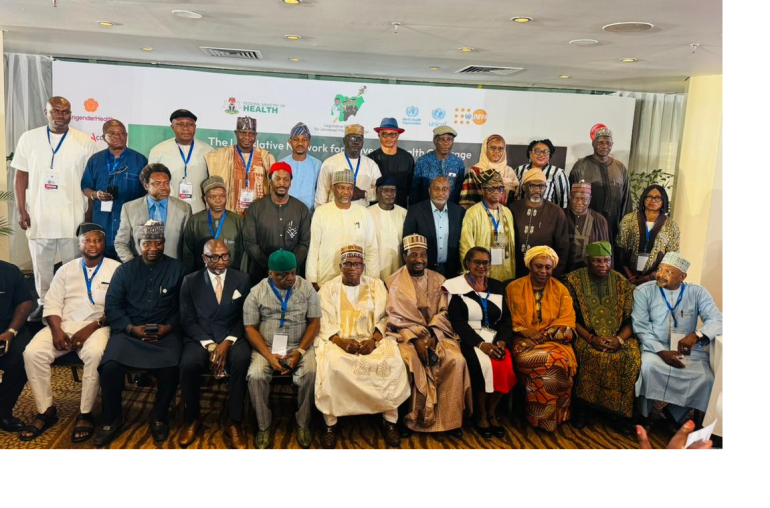
The summit, themed “Building Responsive, Sustainable Health Systems: Leveraging Legislative Action for Digital Innovation and Human Capital for Universal Health Coverage,” identified both progress and pressing challenges in Nigeria’s digital health landscape.
Delegates cited weak interoperability between digital health platforms, poor data reliability, limited infrastructure, and high digital illiteracy as major obstacles. They called for stronger data protection frameworks and inclusive digital policies to ensure that vulnerable populations are not left behind.
Key resolutions included:
Integrating private health providers into national digital systems
Expanding solar-powered infrastructure for health facilities
Improving data interoperability and protection
Investing in digital literacy and health worker training
Strengthening oversight and accountability mechanisms in public health spending
Health Security as National Priority
Delivering the opening address on behalf of Senate President Senator Godswill Akpabio, Deputy Senate President Barau Jibrin reiterated that “the health of a nation is the truest measure of its wealth.”
He pledged the 10th National Assembly’s commitment to prioritising healthcare through effective laws, local pharmaceutical production, and the integration of primary health centres into tertiary care systems.
“Health security is national security,” he said. “Every health facility should serve as a data collection hub for informed policymaking.”
The summit, attended by delegates from federal and state legislatures, development partners, and civil society, concluded with a call for joint learning, open-door legislative processes, and stronger domestic accountability in health financing.
“Nigeria has the knowledge and the talent,” Dr. Ursu remarked. “What remains is ensuring implementation — turning good policies into measurable health outcomes.”
 play_arrow