Listeners:
Top listeners:
-
play_arrow
104.9FM Best rock music demo
-
play_arrow
Demo Radio Nr.1 For New Music And All The Hits!
-
play_arrow
Demo Radio Techno Top Music Radio
-
 play_arrow
Police Commissioner Launches Weapon and Riot Control Training for FCT Officers Democracy Radio

Nigeria Customs to Enforce Mandatory Drug Testing for All Officers

By Oluwakemi Kindness
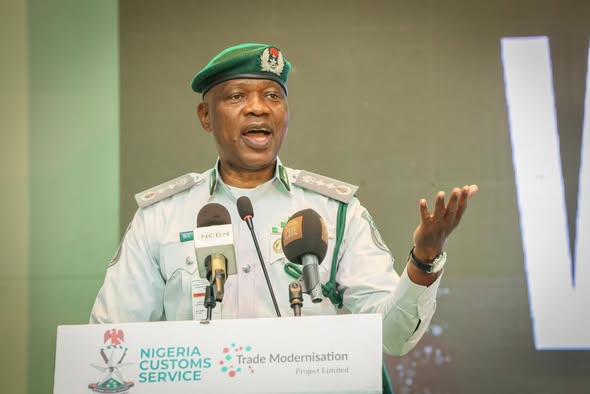
The Nigeria Customs Service (NCS) is set to implement mandatory drug testing for all incoming recruits and serving officers. The Comptroller-General of Customs (CGC), Adewale Adeniyi, announced during the closing session of the service’s 2025 Conference in Abuja on Friday, November 21, 2025.
According to a statement released on Tuesday by Customs spokesperson Abduliahi Maiwada, the initiative aims to prevent substance abuse from undermining operational integrity, judgment, and national security responsibilities.
“The era of overlooking early signs of substance abuse in the ranks is over,” Adeniyi said. “Officers assigned to revenue collection, enforcement, and border security must possess sound judgment at all times. There will be no compromise.”
While the policy targets new recruits, all serving officers across Commands, Zones, and Headquarters will also undergo testing. The CGC emphasized that the move addresses past incidents where erratic behaviour or poor decision-making within certain Commands was linked to substance misuse.’
By enforcing mandatory drug screening, the NCS seeks to prevent future operational failures, reduce the need for rehabilitation, and ensure a fully drug-free workforce. Adeniyi also urged officers to prioritize personal health, regular medical checks, and mental and physical fitness, highlighting their importance in effective service delivery.
The decision marks a renewed focus on accountability and professional discipline within Nigeria’s frontline border and revenue enforcement agency.
• Northeast: Boko Haram and ISWAP attacks persist, displacing over 1.5 million people.
• Northwest: Banditry continues, prompting military operations like Operation Hardin Daji and Operation Thunderstrike.
• North-Central: Spillover violence displaces communities; Operation Wild Stroke and Agro Rangers protect farmers.
• Southeast: Separatist groups including IPOB target infrastructure and businesses; dialogue and political solutions ongoing.
• South-South: Militancy has reduced due to engagement with ex-militants.
Ihonvbere stressed that Nigeria’s security challenges require multi-faceted responses combining military action with community engagement, rehabilitation, and reintegration programs, while noting the broader regional implications for West Africa.
Both leaders reinforced the importance of national unity, resilience, and support for security forces, calling on citizens to remain calm and rely on verified information.
“Our response must be disciplined, empathetic, and united. Violence will not weaken our resolve,” Abbas reiterated.
The House session signals strong parliamentary backing for government security operations, emphasizing coordination, intelligence sharing, and practical measures as key to restoring safety nationwide.