Listeners:
Top listeners:
-
play_arrow
104.9FM Best rock music demo
-
play_arrow
Demo Radio Nr.1 For New Music And All The Hits!
-
play_arrow
Demo Radio Techno Top Music Radio
-
 play_arrow
Police Commissioner Launches Weapon and Riot Control Training for FCT Officers Democracy Radio
Nigeria Moves to Modernise Social Development Act to Strengthen Inclusion
By Julian Osamoto
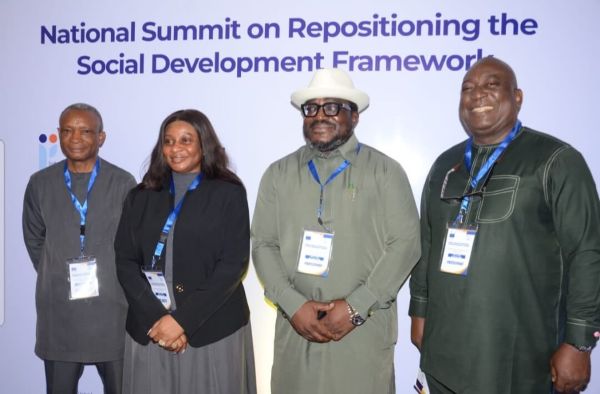
Nigeria’s Social Development Act of 1974 is set for a major overhaul as stakeholders at the National Social Development Summit in Abuja called for a modern, well-coordinated framework to strengthen welfare services and protect vulnerable citizens.
The two days summit, organised by the International Institute for Democracy and Electoral Assistance (International IDEA) under the EU CSO Strengthening Bridge Project, brought together government officials, lawmakers, civil society organisations, and development partners to reposition the five-decade-old law for contemporary national needs.
Lawmakers Push for Urgent Reform
Declaring the summit open, Hon. Victor Obuzor, representing the Speaker of the House of Representatives, Hon. Tajudeen Abbas, said the current Act, codified as LFN 2004 no longer reflects today’s social realities.
He noted that fragmentation, overlapping mandates, and weak coordination have reduced the Act’s impact.
“A modernised framework is necessary to ensure policy coherence, gender inclusion, and effective coordination,” hon Abbas stated
Abbas disclosed that the House Committee on Civil Society Organisations and Development Partners has began reviewing gaps in the law while engaging ministries, state institutions, CSOs, as well as regulatory agencies, including those responsible for anti-money laundering oversight.
He emphasised the importance of gender equality, disability inclusion, youth welfare, and protection of vulnerable groups issues currently missing or weakly articulated in the old Act.
Delivering a goodwill message by the Minister of Humanitarian Affairs and Poverty Reduction, Dr. Bernard Doro said the reform aligns with President Bola Tinubu’s Renewal Agenda.
Represented by Peter Audu, Deputy Executive Secretary in the ministry, Dr. Doro outlined key objectives of the summit to include:
- Prioritise social inclusion and gender equality.
- Strengthen coordination among MDAs, CSOs, and development partners.
- Propose amendments to the Social Development Act (2004) and Social Development Policy (1989).
- Develop a national roadmap to guide coordination, financing, accountability, and implementation.
Dr Doro said the updated framework will directly benefit children, women, persons with disabilities, older persons, and other vulnerable populations.
Cooperatives Critical to Grassroots Inclusion
President of the Cooperative Federation of Nigeria, Hanatu Mershak, described the summit as a crucial step toward strengthening community-level development.
“Cooperatives are global drivers of social inclusion, economic empowerment, and financial access. We remain ready to support policies that enhance grassroots development,” she stated.
She commended the EU CSO Bridge Project for fostering collaboration and encouraged delegates to ensure practical outcomes.
1974 Act Outdated
Providing a legal review, Barr. Shekwonya Galadima of the Nigerian Law Reform Commission said the Act, enacted on February 28, 1974, is outdated and no longer capable of guiding Nigeria’s evolving social needs.
He noted that the Act originally established the Social Development Division within the then Ministry of Employment, Labour, and Productivity, with responsibilities ranging from welfare to community development.
“The Act has remained largely untouched for 50 years, creating policy fragmentation and weak coordination across MDAs and CSOs,” he said.
Galadima revealed that the Law Reform Commission is already drafting an amendment bill, which will incorporate recommendations from the summit.
In her keynote address, Mrs. Valentina Enih, Commissioner for Children, Gender, and Social Development, Enugu State, defined social development as the backbone of societal well-being.
“Social development ensures growth that is human, equitable, and sustainable,” she said.
Enih highlighted gaps in the current law and stressed the need for a unified national approach, stronger regulation of CSOs, and enhanced collaboration.
Expected Outcomes
The summit is expected to deliver:
- A revised Social Development Act
- An updated National Social Development Policy
- A strengthened coordination framework for MDAs and CSOs
- A national roadmap for inclusive development and welfare delivery
Stakeholders however, expressed optimism that the reforms will expand protection for women, children, youth, persons with disabilities, and other vulnerable groups.