Listeners:
Top listeners:
-
play_arrow
104.9FM Best rock music demo
-
play_arrow
Demo Radio Nr.1 For New Music And All The Hits!
-
play_arrow
Demo Radio Techno Top Music Radio
-
 play_arrow
Police Commissioner Launches Weapon and Riot Control Training for FCT Officers Democracy Radio
Reps to Probe Non-release of N174.26bn in Agric
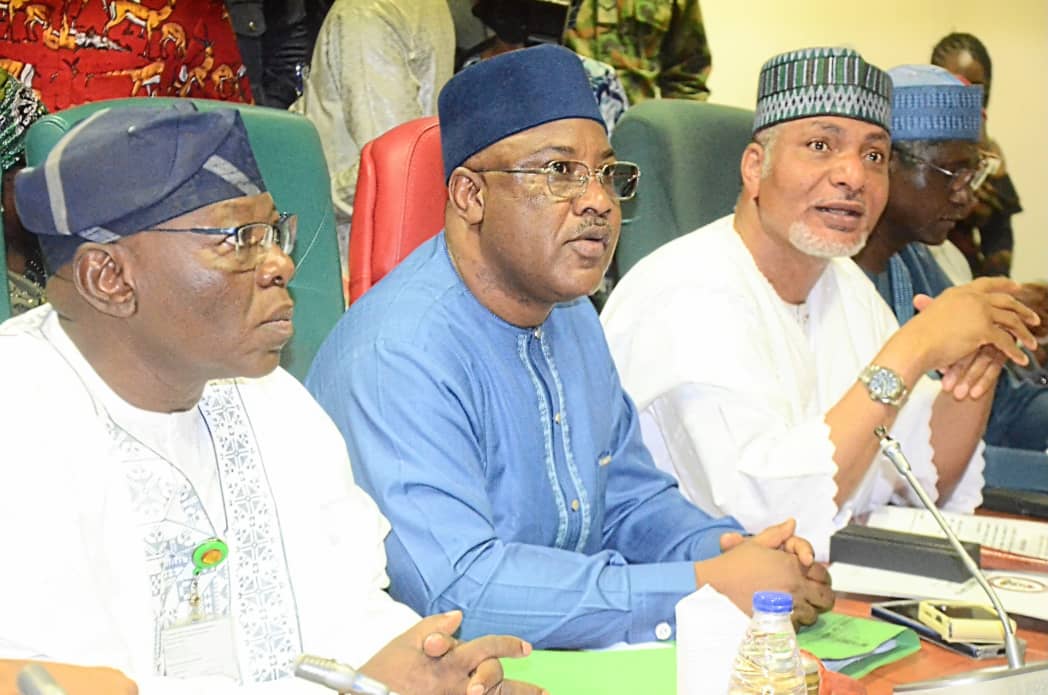
By Oluwakemi Kindness
The House of Representatives is set to investigate the non-release of N174.26 billion in agricultural intervention funds, amid warnings that the delay is aggravating Nigeria’s food security challenges.
This is despite the federal government’s ongoing state of emergency on food security.
Chairman of the House Committee on Agricultural Production and Services, Bello Ka’oje, in a statement on Sunday, says all relevant Ministries, Departments and Agencies (MDAs), as well as development partners, must immediately provide documents explaining why the funds remain stuck.
The probe follows the House’s January resolution mandating the Committee to scrutinise development partner–funded agricultural projects, especially those supported by the African Development Bank (AfDB) and the Japan International Cooperation Agency (JICA).
Ka’oje noted that although $99.67 million out of the AfDB’s $134 million loan for the National Agricultural Growth Scheme–Agro Pocket (NAGS-AP) Project has been paid into the Consolidated Revenue Fund, N55.30 billion is yet to be released to agro-dealers supplying inputs to 280,000 wheat farmers and 150,000 rice farmers under the 2024/2025 dry season programme.
He also revealed that the first tranche of the 15 billion Yen JICA Food Security Emergency Loan, amounting to N118.96 billion and disbursed in March 2025, has similarly not been released to implementing agencies.
The facility was designed to support 550,000 smallholder farmers with subsidised inputs for rice, maize, soya beans, and cassava across the 2025 wet season and 2025/2026 dry season.
Ka’oje warned that the delays have already forced farmers to miss planting windows, leading to reduced output in the 2025 harvest and threatening the 2026 farming season.
He added that Nigeria also risks losing an additional $200 million AfDB result-based financing package due to stalled implementation.
He stressed that the situation demands transparency and swift action, insisting that withholding critical food security funds at a time of national crisis is “unacceptable”.
The Committee urged all stakeholders to cooperate fully with the National Assembly to clear bottlenecks and ensure immediate implementation of the interventions.