Listeners:
Top listeners:
-
play_arrow
104.9FM Best rock music demo
-
play_arrow
Demo Radio Nr.1 For New Music And All The Hits!
-
play_arrow
Demo Radio Techno Top Music Radio
-
 play_arrow
Police Commissioner Launches Weapon and Riot Control Training for FCT Officers Democracy Radio
NLC Criticizes Power Sector Failures, Demands New Electricity Road Map
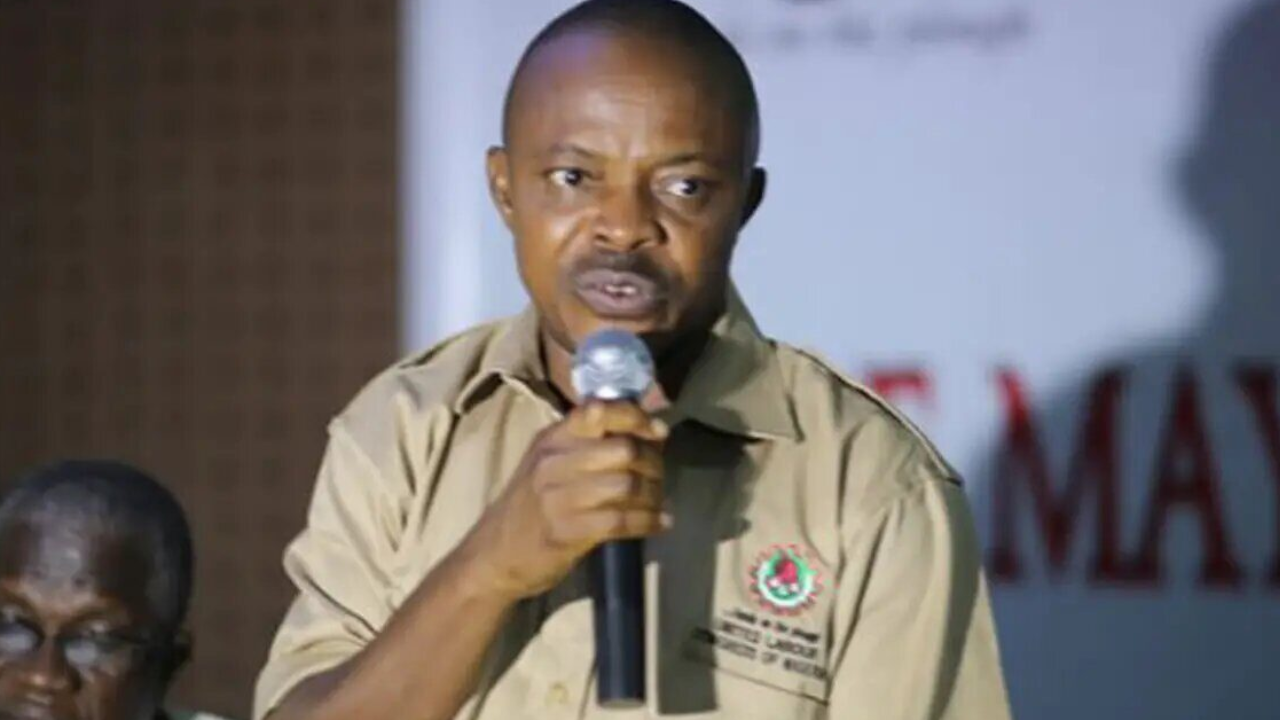
By Chinedu Echianu
The Nigeria Labour Congress (NLC) has criticised the state of Nigeria’s electricity sector, describing more than a decade of privatisation as a failure that has worsened energy access for citizens and businesses and demanded a new road map for the sector.
In a statement issued on Sunday by its President Joe Ajaero, the labour union said persistent national grid collapses and disputes between distribution companies and the transmission system demonstrate systemic weaknesses in the sector.
The comments followed remarks by Ajaero at the National Union of Electricity Employees’ annual conference of women and youth held in Abuja on February 13.
According to Ajaero, electricity generation levels remain largely unchanged from pre-privatisation output, hovering between 4,000 and 5,000 megawatts.
He said this reflected stagnation rather than the promised improvements that accompanied the reform process.
“Instead of progress, we witness regression. Instead of light, we have darkness,” Ajaero said, citing recurring nationwide blackouts as evidence that reforms have not achieved their intended results.
The labour leader characterised the privatisation of generation and distribution assets as a flawed exercise that transferred public resources to investors allegedly lacking the technical or financial capacity to manage them effectively.
He argued that many companies relied on loans from local banks rather than fresh capital inflows and that consumers now bear the cost through higher electricity tariffs.
The NLC also condemned the electricity tariff band classification system — which groups consumers into categories based on supply hours — describing it as unfair to ordinary citizens and calling it a disguised price increase without corresponding service improvements.
The union questioned reports of possible federal payments running into trillions of naira to generation companies, arguing that public funds should not be used to support private operators that have not met expectations.
It warned that such spending would be unjustified and demanded greater accountability in sector financing.
Reiterating its long-standing position, the NLC urged government authorities to treat electricity as a social service rather than a purely commercial venture.
The union called for stronger public-sector leadership and investment in generation and transmission infrastructure, saying private-sector dominance had not delivered the anticipated benefits.
The NLC proposed a national stakeholders’ summit involving labour groups, manufacturers, and technical experts to develop a comprehensive roadmap for the sector.
Among its priorities are affordable and stable power supply, reversal of existing privatisation arrangements, tariffs tied to service delivery, and expanded public investment.
“The Nigerian people cannot continue to pay for darkness,” the union said, adding that it would mobilise its members against policies it considers exploitative.