Listeners:
Top listeners:
-
play_arrow
104.9FM Best rock music demo
-
play_arrow
Demo Radio Nr.1 For New Music And All The Hits!
-
play_arrow
Demo Radio Techno Top Music Radio
-
 play_arrow
Police Commissioner Launches Weapon and Riot Control Training for FCT Officers Democracy Radio

FCT Elections: Situation Room Flags Legal, Security Gaps
By: Julian Osamoto
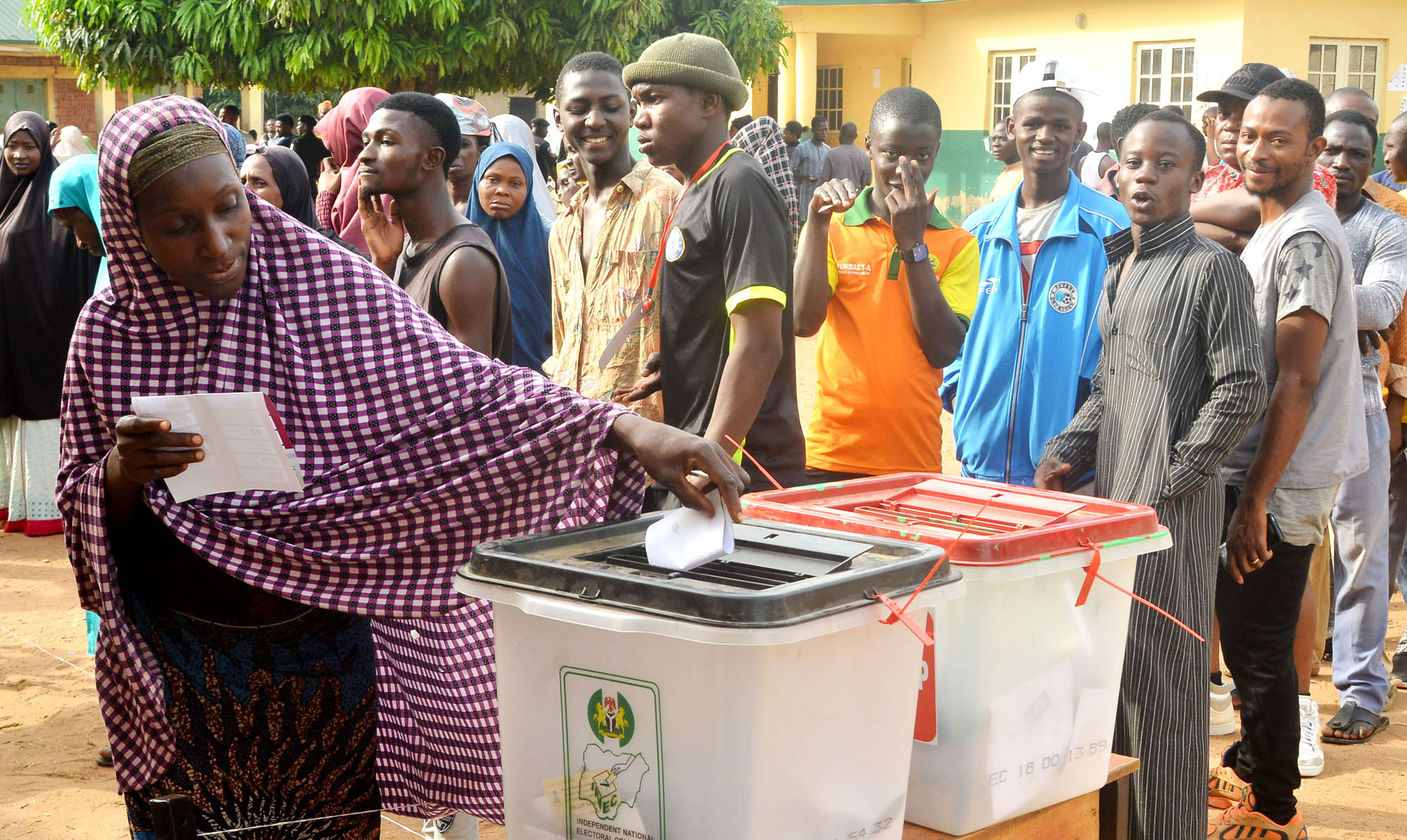
Civil society observers have warned that legal loopholes and potential security threats could undermine the credibility of the 2026 FCT Area Council Elections scheduled for Saturday, 21 February.
The elections which will cover all six Area Councils including Abaji, AMAC, Bwari, Gwagwalada, Kuje, and Kwali, spans 62 electoral wards, 2,822 polling units, with a total of 1,680,315 registered voters are set to compete for six Chairmanship and 62 Councillorship positions.
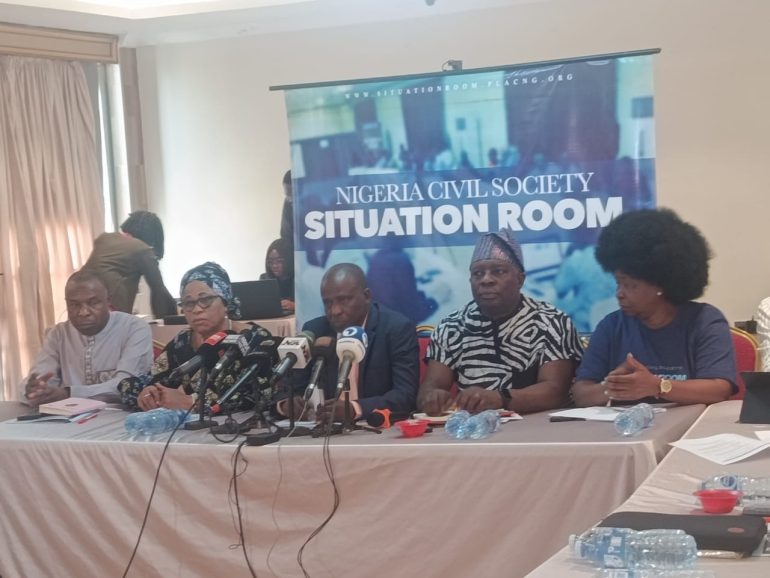
In a statement signed byYunusa Ya’u Convener, Nigeria Civil Society Situation Room and read by Celestine Odo Co-Convener, reveals that more than 1.6 million registered voters will contest six Chairmanship and 62 Councillorship seats.
CSOs, including Kimpact Development Initiative (KDI), CLEEN Foundation, ActionAid Nigeria, will also deploy observers, feeding real-time updates into the Situation Room’s reporting system. According to him, observers flagged that the legal framework governing the polls leaves gaps that may affect transparency.
However, past elections show persistent voter apathy, notably in AMAC, where turnout fell to just 5.09% in 2022.
Civil society actors cautioned that the failure to mandate real-time electronic transmission of results, as highlighted in the 2026 amendments to the Electoral Act, risks deepening voter disillusionment and undermining trust in the process.
Speaking on the security architecture, he noted that a strategic review by the National Peace Committee and INEC highlighted potential risks across the FCT:
• AMAC: Risk of vote-buying and political intimidation in urban centers.
• Gwagwalada: Potential indigene-settler tensions and political thuggery. •
Bwari: Farmer-herder conflicts and kidnapping threats could deter rural voters.
• Kwali: Cross-border security pressures may affect poll stability.
The group urged FCT Police Command to ensure security measures target criminal activity without disrupting law-abiding voters, while ensuring strict enforcement against vote-buying and political intimidation.
While INEC has deployed BVAS machines to all 2,822 polling units, observers warned that technological effectiveness depends on the security and mandatory electronic transmission of results to the IReV portal.
They emphasised the need for INEC to ensure 100% real-time upload of Form EC8A to the IReV portal.
Also trained personnel must be available to handle technical issues and prevent disenfranchisement, while Polling units must open at 8:30 am to avoid disenfranchisement of voters.
The Civil society observers called on eligible voters to participate peacefully and resist vote-trading, which undermines democratic development.