By Sofiat Adenekan-Abdul
The National Institute for Legislative and Democratic Studies (NILDS) has warned, that escalating conflict in the Middle East could increase living costs and deepen Nigeria’s security challenges, with rising energy prices, extrem propaganda posing additional risks.
Director-General of the institute, Professor Abubakar Sulaiman, also noted that that disruptions to global energy markets, international trade and supply chains could also increase the cost of transportation, food production and other essential goods in the country.
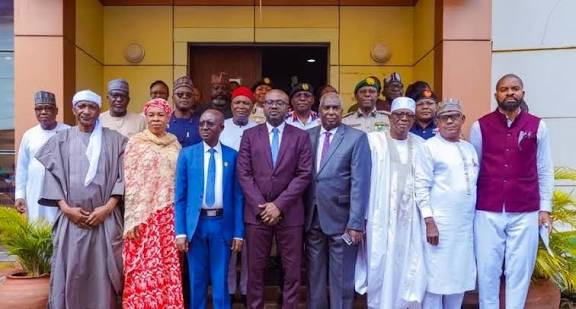
He spoke on Monday, at a public dialogue organised by the Legislative Centre for Security Analysis (LeCeSA) in Abuja, to examine the economic, political and security implications of the Middle East conflict for Nigeria.
Professor Sulaiman emphasised that Nigeria’s exposure to international energy markets, trade networks, religious ties and diplomatic relations meant that developments in the region could have consequences beyond its immediate geographical boundaries.
He warned that extremist groups could exploit the conflict to spread propaganda, deepen religious and political divisions and recruit vulnerable Nigerians.
The NILDS director-general called for economic diversification, stronger domestic production and measures to protect vulnerable households, urging the government to address existing security threats, including banditry and terrorism.
“The National Assembly had an important role in strengthening oversight and supporting evidence-based policies to mitigate the potential effects of the conflict”.
The Director of the Legislative Centre for Security Analysis, Professor Zubairu Dagona, said Nigeria could not isolate itself from the economic and security consequences of the conflict.
He identified terrorism, insurgency, banditry, separatist agitations and ethno-religious tensions as existing vulnerabilities that could be aggravated by extremist narratives and misinformation surrounding the crisis.
“Higher crude oil prices could increase government revenue and foreign exchange earnings but warned that rising transportation costs, inflation and supply-chain disruptions could offset the gains.”
An economist at the University of Abuja, Dr Mohammed Shuaibu, who warned that the conflict could produce mixed economic outcomes for Nigeria, identified possible disruptions to investment flows, exchange rates, interest rates and borrowing costs as additional risks.
He called for stronger fiscal and foreign exchange buffers, improved food security, energy diversification and more resilient supply chains to address the situation
Also Retired Major General Mathias Efeovbokhan, Managing Director and Chief Executive Officer of the Pan African Foundation for Peace and Security, advocated an approach combining intelligence gathering, effective governance, border management and security-sector reforms.
Efeovbokhan urged the government to strengthen security institutions, improve personnel welfare and rebuild public trust through closer cooperation between security agencies and communities
The Minister of Information and National Orientation, Mohammed Idris, represented by the Director-General of Voice of Nigeria, Jibrin Ndace, said Nigeria’s response to the conflict would be guided by its national interests, commitment to peaceful resolution and respect for national sovereignty.
Idris assured that the Federal Government had activated diplomatic and consular channels to monitor developments and protect Nigerians in affected countries.
He added that the Ministry of Foreign Affairs had also convened an emergency inter-ministerial meeting to coordinate the government’s response.
Idris urged the media and relevant institutions to provide accurate and timely information to counter misinformation and prevent unnecessary public anxiety.
The dialogue brought together policymakers, security experts, academics and other stakeholders to examine the implications of the Middle East conflict for Nigeria’s economy, security and foreign relations.
Edited by Julian Osamoto