By Julian Osamoto
The United States and Nigeria have agreed to strengthen cooperation against sextortion, romance scams and other forms of transnational cybercrime.
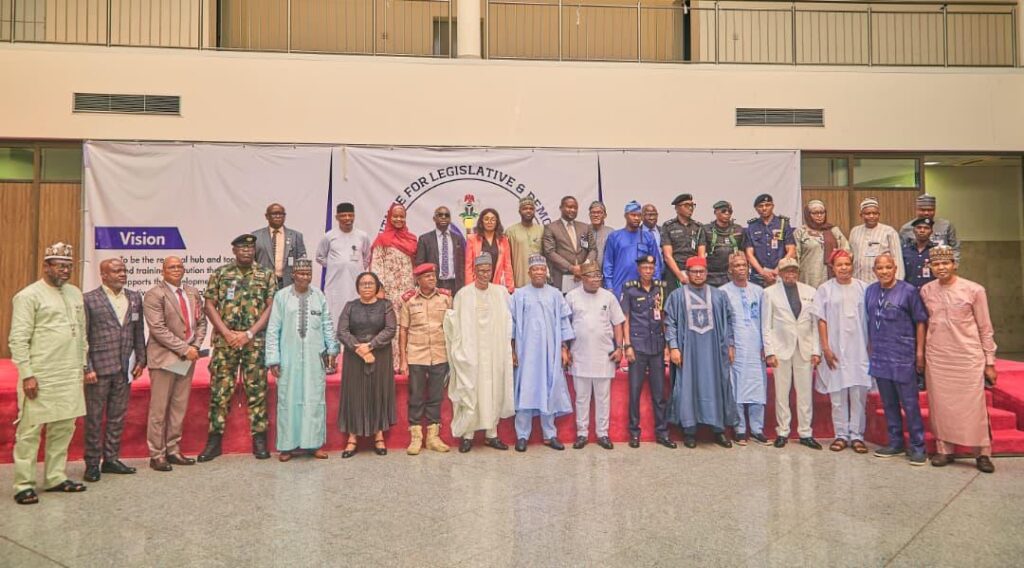
The commitment followed a visit to Abuja by US Deputy Assistant Secretary of State for International Narcotics and Law Enforcement Affairs, Michael Gonzales, who held meetings with senior officials of the Economic and Financial Crimes Commission (EFCC), the Office of the National Security Adviser, the National Drug Law Enforcement Agency and the Nigeria Police Force.
The discussions, which coincided with Nigeria’s Cybercrime Awareness Week, focused on expanding joint investigations and improving efforts to identify and dismantle criminal networks targeting victims in both countries.
Gonzales said recent extraditions showed that criminals could not use international borders to evade justice when countries combined their investigative and law enforcement capabilities.
In August, Nigeria extradited two alleged cybercriminals to the United States over separate cases of financially motivated sextortion involving American minors who later died by suicide.
The US Embassy said the FBI Legal Attaché Office in Abuja had worked with the EFCC on 41 extraditions since 2022, including five completed in 2026.
It said the figure represented a significant increase from 2012 to 2021, when the two countries recorded four arrests and five extraditions.
Gonzales commended the EFCC, the Federal Ministry of Justice and the Office of the Attorney General of the Federation for supporting investigations and extradition proceedings.
He also called for faster information sharing, stronger financial intelligence and more proactive investigations targeting criminal networks and those who facilitate their activities.
The US official said financially motivated sextortion continued to pose a serious threat to young people, citing more than 50,000 reports received by the US National Center for Missing and Exploited Children in 2025.
He said the FBI had identified Nigeria and other parts of West Africa, alongside Southeast Asia, as locations where some of the most prevalent sextortion networks operated.
The two countries are also seeking to tackle romance scams, in which fraudsters exploit personal relationships to steal victims’ savings and retirement funds.
The Nigeria Police Force National Cybercrime Centre launched a nationwide online safety campaign in March to raise awareness about romance scams, sextortion, phishing, identity theft and business email compromise.
Gonzales said future cooperation would focus on protecting victims, disrupting criminal networks, securing successful prosecutions and strengthening Nigeria’s capacity to investigate and report cybercrime.