Listeners:
Top listeners:
-
play_arrow
104.9FM Best rock music demo
-
play_arrow
Demo Radio Nr.1 For New Music And All The Hits!
-
play_arrow
Demo Radio Techno Top Music Radio
-
 play_arrow
Police Commissioner Launches Weapon and Riot Control Training for FCT Officers Democracy Radio

Breaking the Silence: How Nigerian Communities Are Fighting GBV
By Julian Osamoto
Gender-based violence (GBV) remains a pervasive crisis in Nigeria, often hidden behind closed doors and perpetuated by harmful sociocultural norms, compounded by weak enforcement of existing laws.
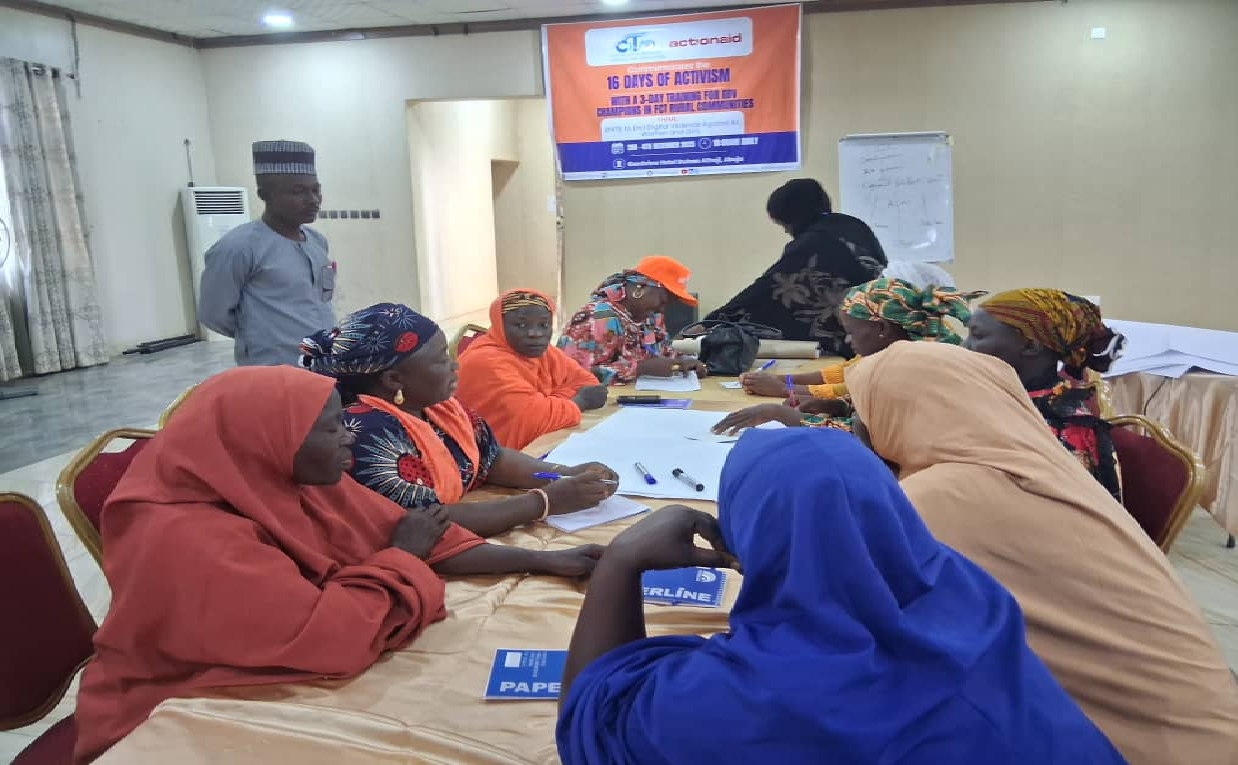
This was the conclusion reached by stakeholders at a three days gender based violence training, organised by Centre for Information Technology and Development (CITAD), with support from ActionAid Nigeria, to mark this year’s 16 Days of Activism against GBV in Abuja.
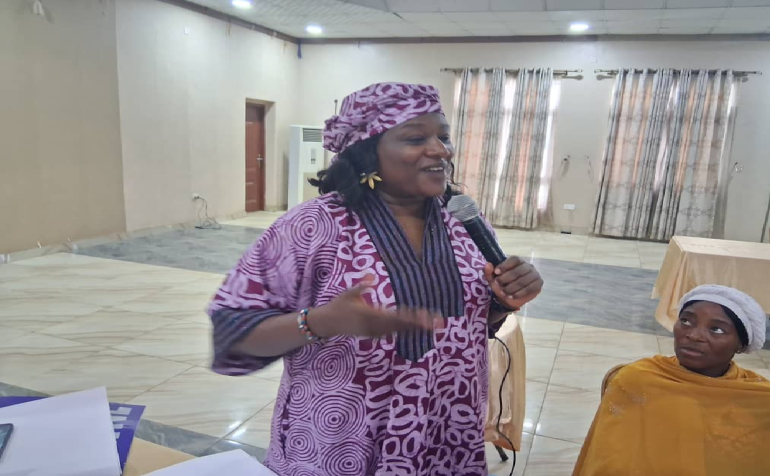
Speaking during the program, Niri Goyit, ActionAid’s Women’s Rights Specialist, described the problem as a “pandemic” rooted in decades-old cultural practices that treat women as objects rather than human beings.
“Gender-based violence is an abuse of fundamental human rights,” Goyit said, highlighting rights such as life, freedom of speech, movement, and association. “When these rights are denied, women are treated as second-class citizens, and the cycle of violence continues.”
Goyit stressed that lasting change requires more than awareness campaigns. “We need capacity building, mentoring, and reorientation, especially among traditional and religious leaders who are custodians of these norms. These trainings are critical to changing mindsets ingrained over decades.”
She also highlighted that women themselves can sometimes perpetuate GBV, emphasizing the need for education and empowerment. “Teaching our children, sensitizing men and women, and implementing laws are all crucial steps to tackling GBV,” she added.
Implementation, Not Just Laws
Goyit noted that Nigeria’s challenge lies not in the absence of laws, but in enforcement. Despite frameworks such as the Violence Against Persons Prohibition Law, the Child Rights Act, and cyber laws for tech-facilitated GBV, perpetrators often go unpunished.
“When justice is delayed or denied, it signals to perpetrators that they can act with impunity,” she said. “Survivors need confidence in the system to report cases, and the government, security agencies, and courts must ensure justice is delivered.”
Technology as a Tool for Change
Yasmin Salako, Programs Officer at the Centre for Information Technology and Development (CITAD), highlighted how CITAD have been utilizing ICT in reaching remote communities.
“Six ICT centers have been established, bridging the digital divide and providing training in education, health, sexual health, agriculture, and economic empowerment,” she said.
“Economic power affects vulnerability. Empowered women are less likely to experience economic violence. Our work addresses both men and women because, while violence can affect anyone, women disproportionately bear the brunt.”
Toward Sustainable Solutions
The training also emphasises creating community referral systems, linking victims to legal, health, and psychosocial support. By involving community custodians, religious and traditional leaders.
According to her, ActionAid and CITAD ensure interventions are sustainable and culturally grounded. “Changing mindsets takes time”
“But by engaging everyone, leaders, youth, men, and women, we are creating a foundation to reduce gender-based violence across communities,” Salako explained.
Challenges Ahead and the Road Forward
Despite progress, deep-rooted cultural challenges persist. Certain communities continue harmful practices, including facticide and educational inequality for girls.
“Economic violence is a form of GBV,” Salako noted. “When women are empowered, they can resist exploitation and abuse, breaking cycles of violence.”
Through ongoing training, community engagement, and technology, ActionAid and CITAD are fostering a generation of informed, empowered, and accountable citizens, demonstrating that fighting GBV requires action at every level, home, school, community, and systemic.
Community-Level Solutions
Hajara Opaluwa-Adamu, ActionAid Nigeria’s Local Rights Programme Advisor, revealed that the organisation works in 20 communities across five area councils, promoting gender equality and women’s empowerment.
Yet challenges persist. “In areas like Gwagwalada, harmful stereotypes and gender norms remain entrenched. Some communities practice facticide, stigmatize persons with albinism, and deny girls equal access to education,” she said.
The ongoing three-day training brings together traditional leaders, religious figures, women leaders, youth, and men, fostering dialogue on harmful practices and empowering women to participate in decision-making.
“The programs aim to challenge norms that justify violence and limit women’s opportunities,” Adamu stressed.