Listeners:
Top listeners:
-
play_arrow
104.9FM Best rock music demo
-
play_arrow
Demo Radio Nr.1 For New Music And All The Hits!
-
play_arrow
Demo Radio Techno Top Music Radio
-
 play_arrow
Police Commissioner Launches Weapon and Riot Control Training for FCT Officers Democracy Radio
China Rejects Nuclear Talks As US-Russia Treaty Expires
By: Aremu Toyeebaht
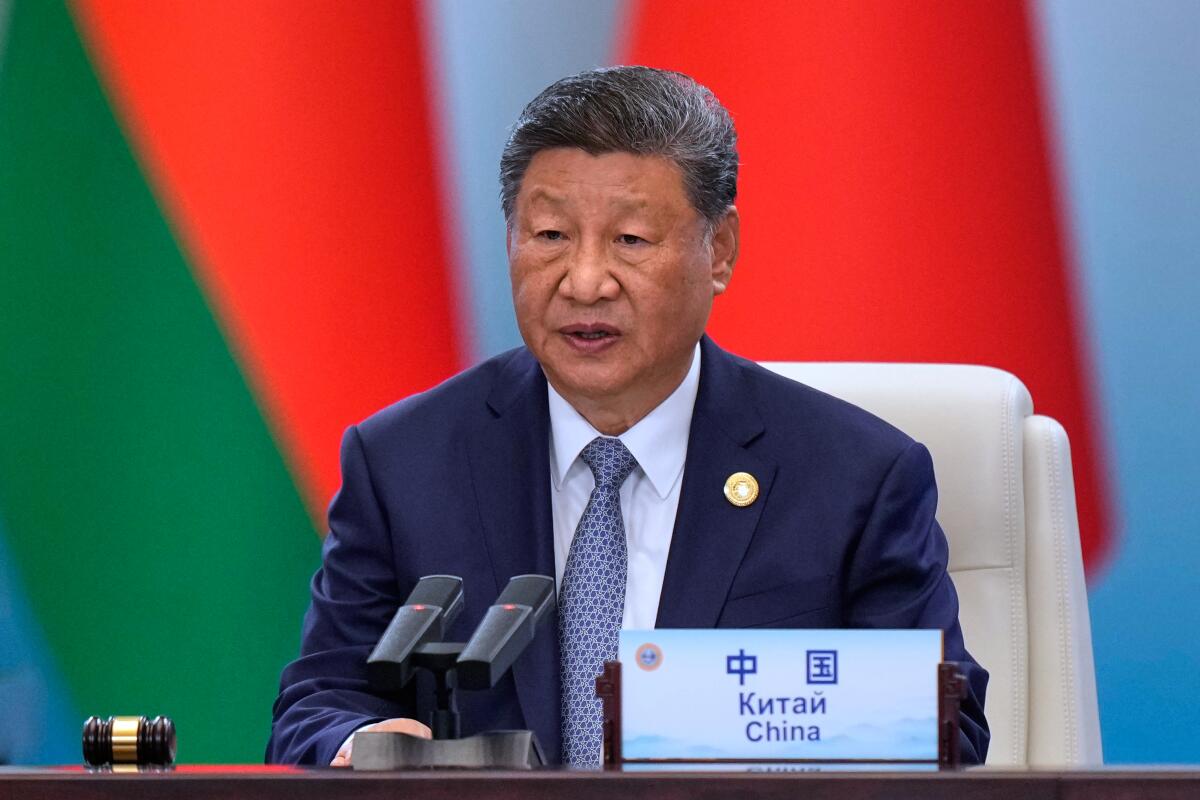
China has ruled out joining nuclear disarmament negotiations for now, distancing itself from renewed calls for trilateral talks following the expiration of the US-Russia New START treaty, which had placed limits on the world’s two largest nuclear arsenals.
The treaty formally lapsed on Thursday, raising concerns among arms control advocates that the absence of binding restrictions could fuel a new global arms race and pressure other nuclear powers, including China, to expand their stockpiles.
Responding to mounting international attention, Beijing said its position remains unchanged, stressing that its nuclear posture is fundamentally different from that of Washington and Moscow.
“China has always maintained that the advancement of arms control and disarmament must adhere to the principles of maintaining global strategic stability,” foreign ministry spokesman Lin Jian told a regular news conference.
He added: “China’s nuclear capabilities are of a totally different scale as those of the United States and Russia, and will not participate in nuclear disarmament negotiations at this stage.”
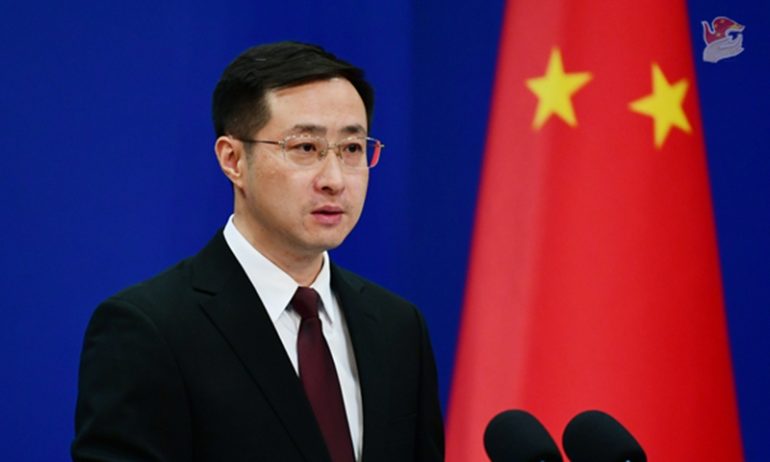
The United States has repeatedly insisted that any future nuclear arms agreement must include China, arguing that Beijing’s rapidly expanding arsenal makes its participation essential. However, diplomatic efforts to bring China to the negotiating table have so far failed.
The New START agreement expired on February 5 after US President Donald Trump did not act on a proposal from Russian President Vladimir Putin to extend the treaty’s warhead limits by one year. Its lapse marks the end of the last major arms control pact constraining US and Russian nuclear forces.
Together, the United States and Russia possess more than 80 per cent of the world’s nuclear warheads, but a series of arms control agreements between the two powers have steadily eroded in recent years.
While China’s nuclear arsenal is expanding, it remains significantly smaller than those of the two nuclear superpowers. Beijing is estimated to have around 550 strategic nuclear launchers, compared with the cap of 800 launchers each that applied to the United States and Russia under New START.
Signed in 2010, the treaty limited each side to 1,550 deployed strategic nuclear warheads, representing a reduction of nearly 30 per cent from the ceiling set under a previous 2002 agreement. Its expiration now leaves global nuclear arms control without a central framework.