Listeners:
Top listeners:
-
play_arrow
104.9FM Best rock music demo
-
play_arrow
Demo Radio Nr.1 For New Music And All The Hits!
-
play_arrow
Demo Radio Techno Top Music Radio
-
 play_arrow
Police Commissioner Launches Weapon and Riot Control Training for FCT Officers Democracy Radio
Civil Groups Demand Police Reform Over Protest Handling, Media Intimidation
By Julian Osamoto
Civil society organisations, media leaders and rights advocates in Nigeria have called for more professional policing of protests, warning that intimidation of demonstrators and journalists is narrowing the country’s democratic space.
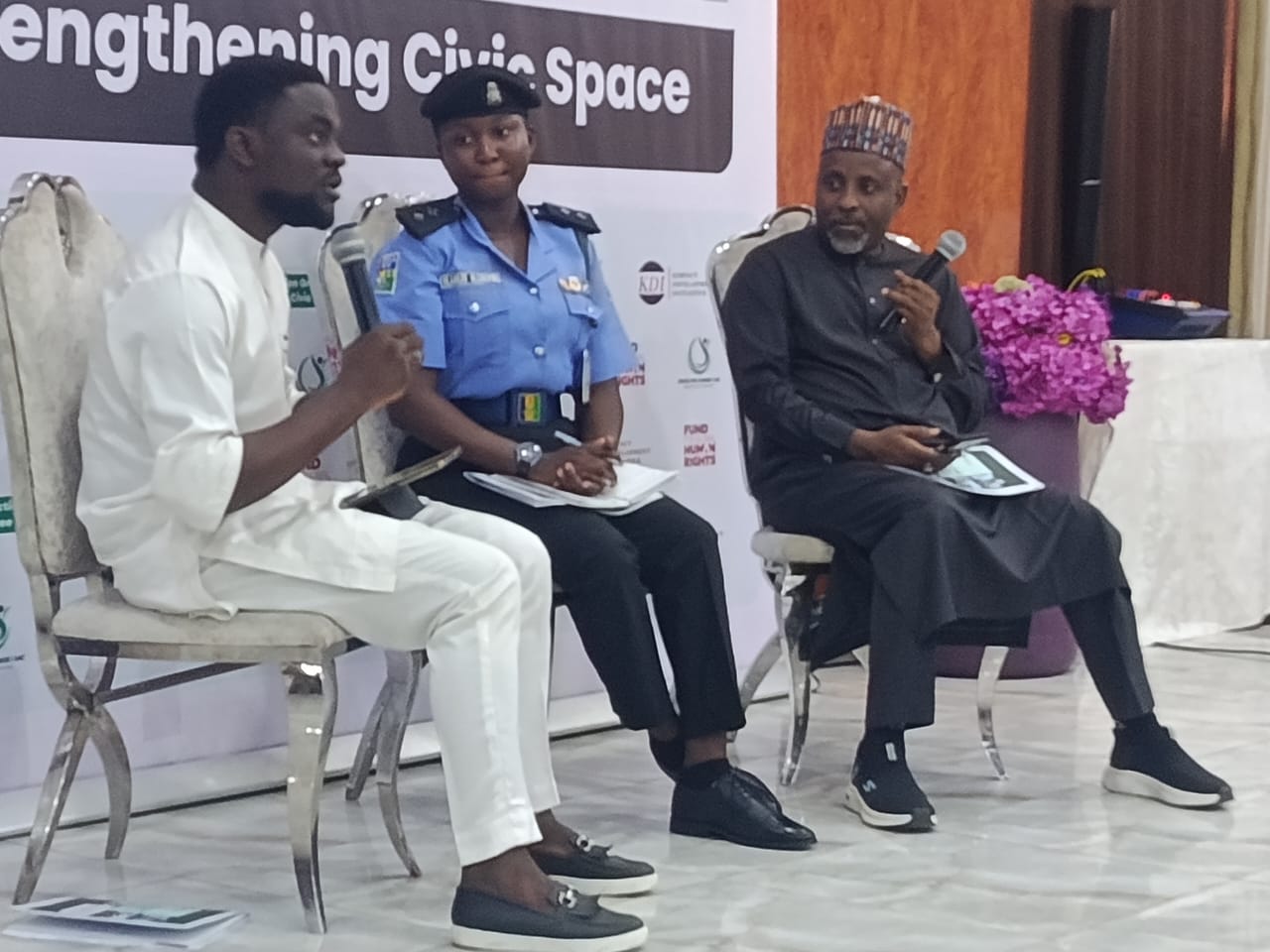
The demand came during a multi-stakeholder roundtable in Abuja organised by the Kimpact Development Initiative (KDI), where participants raised concerns about clashes between security forces and protesters, as well as attacks on journalists covering demonstrations.
Speakers said the way protests are managed has become a key test of Nigeria’s commitment to democratic freedoms, including the rights to peaceful assembly, expression and association.
KDI’s Executive Director, Bukola Idowu, said the forum brought together policymakers, security agencies, civil society groups and the media to address growing tensions around civic engagement.
He said there was concern over how laws — particularly the Public Order Act — are being interpreted and applied, and how this affects citizens’ fundamental rights.
“We want a shared understanding of how these laws are enforced in practice and how that impacts democratic freedoms,” he said, describing the meeting as a platform for dialogue rather than confrontation.
Idowu also stressed the media’s role in shaping public understanding of civic actions and holding institutions accountable.
Government pledges dialogue
In a goodwill message, Interior Minister Olubunmi Tunji-Ojo said civic space could be protected through lawful engagement and respect for constitutional principles. He said the ministry remained open to partnerships that promote internal security while safeguarding freedoms.
He added that journalists must be able to carry out their duties without intimidation, harassment or unlawful detention, and pointed to ongoing discussions around reviewing legal frameworks such as provisions of the Cybersecurity Act and criminal defamation laws.
The minister also emphasised collaboration between civil society, security agencies, youth groups and media institutions to reduce tensions and strengthen public trust.
Human rights concerns
The National Human Rights Commission (NHRC) warned that a shrinking civic space poses a serious threat to national development.
Representing the commission, Fatima Mohammed said intimidation of journalists and suppression of citizens’ voices undermines meaningful participation in governance.
“We advocate a civic space where Nigerians can express themselves without fear,” she said.
Police response
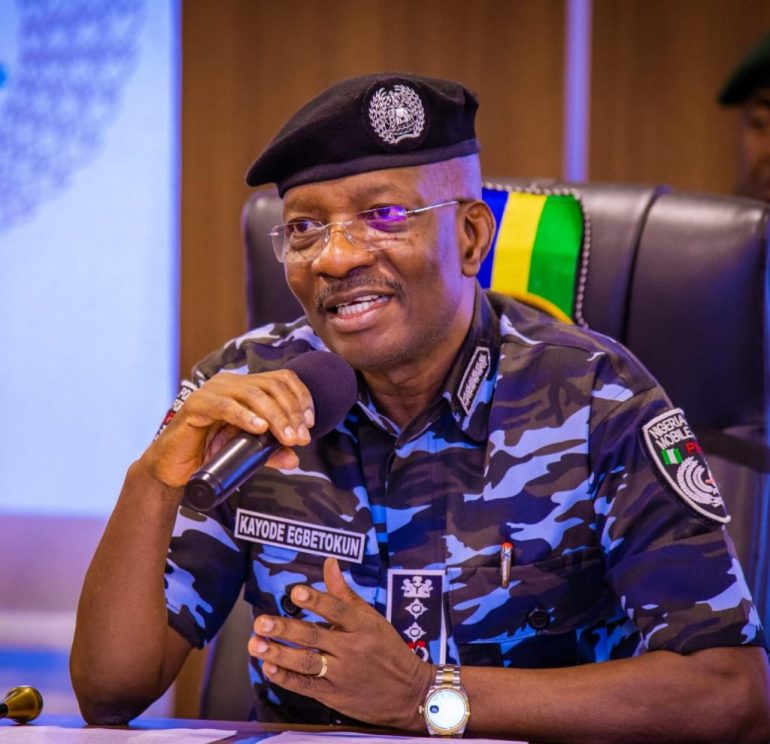
The Inspector-General of Police, Kayode Egbetokun, represented at the event, said national security is a shared responsibility and described the roundtable as an opportunity to improve engagement and collaboration between the police and civil society.

Represented by ASP Olamiju Olubumi, the IGP said ensuring national security was a shared responsibility.
Meanwhile, the Executive Director, Spaces for Change, Victoria Ibezim-Ohaeri, represented by the Digital Rights Programme Associate, Judith Chiamaka, said the conversation came at the right time when there are lots of threat to the Nigerian civic space.
Ibezim-Ohaeri also commended KDI and Action Group for facilitating dialogue and collaboration with the roundtable initiative, hence, it is imperative to ensure sustained engagement towards protection of digital and civic rights, accountability and inclusivity in the democratic space.