Listeners:
Top listeners:
-
play_arrow
104.9FM Best rock music demo
-
play_arrow
Demo Radio Nr.1 For New Music And All The Hits!
-
play_arrow
Demo Radio Techno Top Music Radio
-
 play_arrow
Police Commissioner Launches Weapon and Riot Control Training for FCT Officers Democracy Radio
Customs Launches One-Stop-Shop to Boost Trade Efficiency
By Oluwakemi Kindness
The Nigeria Customs Service has rolled out a One-Stop-Shop (OSS) clearance framework as part of broader business environment reforms aimed at boosting trade efficiency and investor confidence.
The initiative is designed to address long-standing delays at Nigeria’s ports and border stations caused by overlapping checks, fragmented procedures, and weak coordination among clearance units.
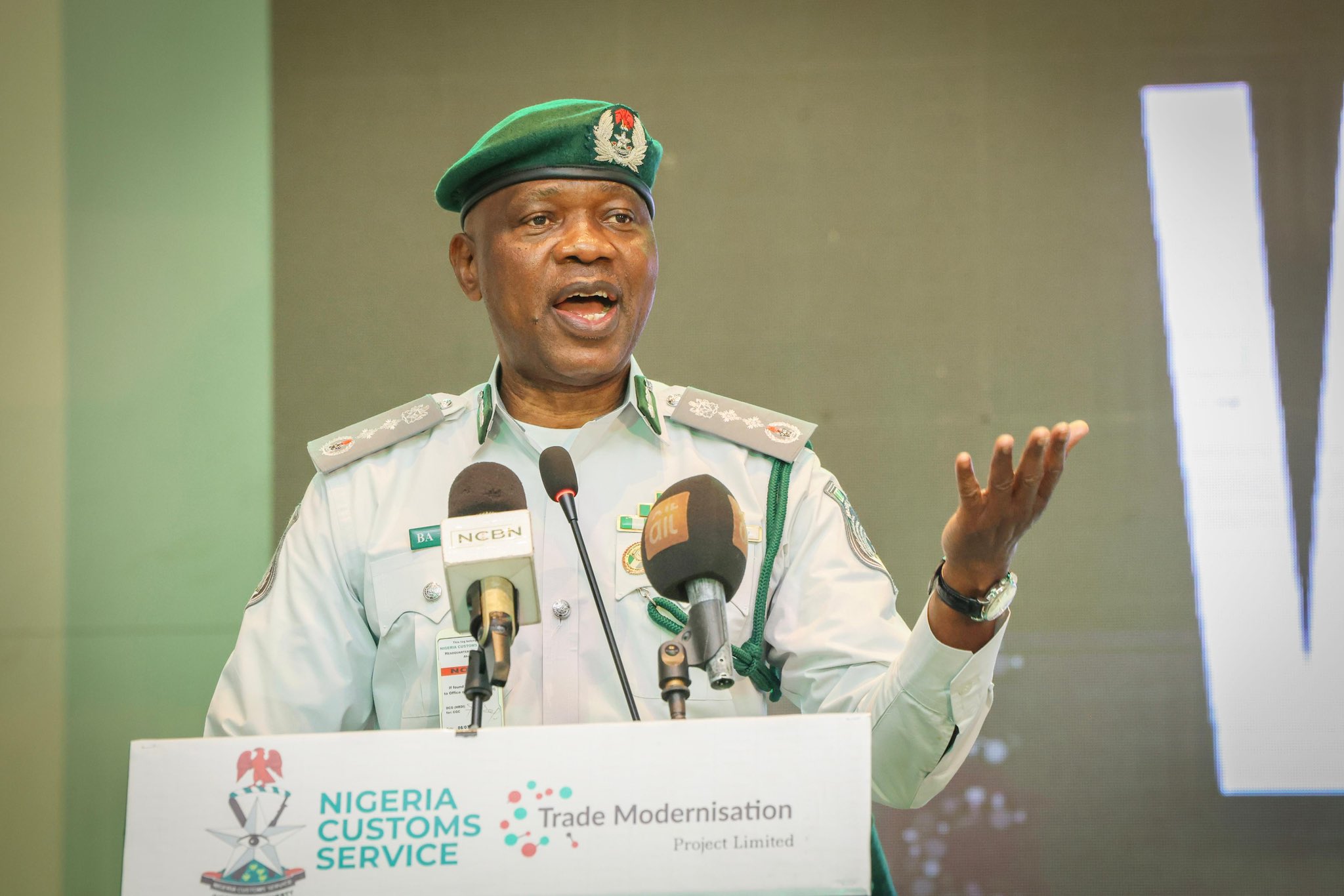
The Comptroller-General of Customs, Adewale Adeniyi, while delivering a keynote address on Friday at the unveiling said the reform represents a shift from isolated interventions to a coordinated, technology-driven clearance system that aligns policy objectives with operational processes.
Customs acknowledged that while physical inspections often take only a few hours, consignments frequently spend several days in idle waiting due to uncoordinated procedures and system gaps.
Under the One-Stop-Shop framework, valuation, customs processing, intelligence, enforcement, compliance monitoring, and gate operations are integrated into a single workflow.
The system is supported by digital tracking, shared dashboards, and clearly defined escalation procedures to ensure accountability and transparency.
The Service said the reform targets a 48-hour cargo clearance timeline, reduces compliance costs, strengthens revenue assurance through improved risk profiling, and enhances transparency through digital audit trails.
Post-clearance controls will be handled primarily by the Post Clearance Audit Unit in line with international best practice.
The One-Stop-Shop is anchored in wider business environment reforms under Executive Order 001 and the Business Facilitation Act, which emphasize transparency, digitization, and inter-agency coordination under the administration of President Bola Tinubu.
Customs also confirmed plans to transition to a fully paperless clearance environment. The first phase, covering core documentation and approval processes, is expected to be rolled out by the end of the second quarter of the year.
The Service reaffirmed its commitment to the National Single Window initiative, scheduled for launch in 2026, which will complement the One-Stop-Shop by extending coordination across the entire border management ecosystem.
Customs said the framework will be subject to continuous review, with performance data and stakeholder feedback guiding improvements aimed at making Nigeria’s borders more efficient, predictable, and competitive.