By Oluwakemi Kindness
The spokesman of the 10th House of Representatives Nigeria, Akin Rotimi Jr., has defended the decision by lawmakers to rescind and reconsider parts of the amended Electoral Act, saying the move followed due parliamentary process and was taken in the broader interest of credible elections.
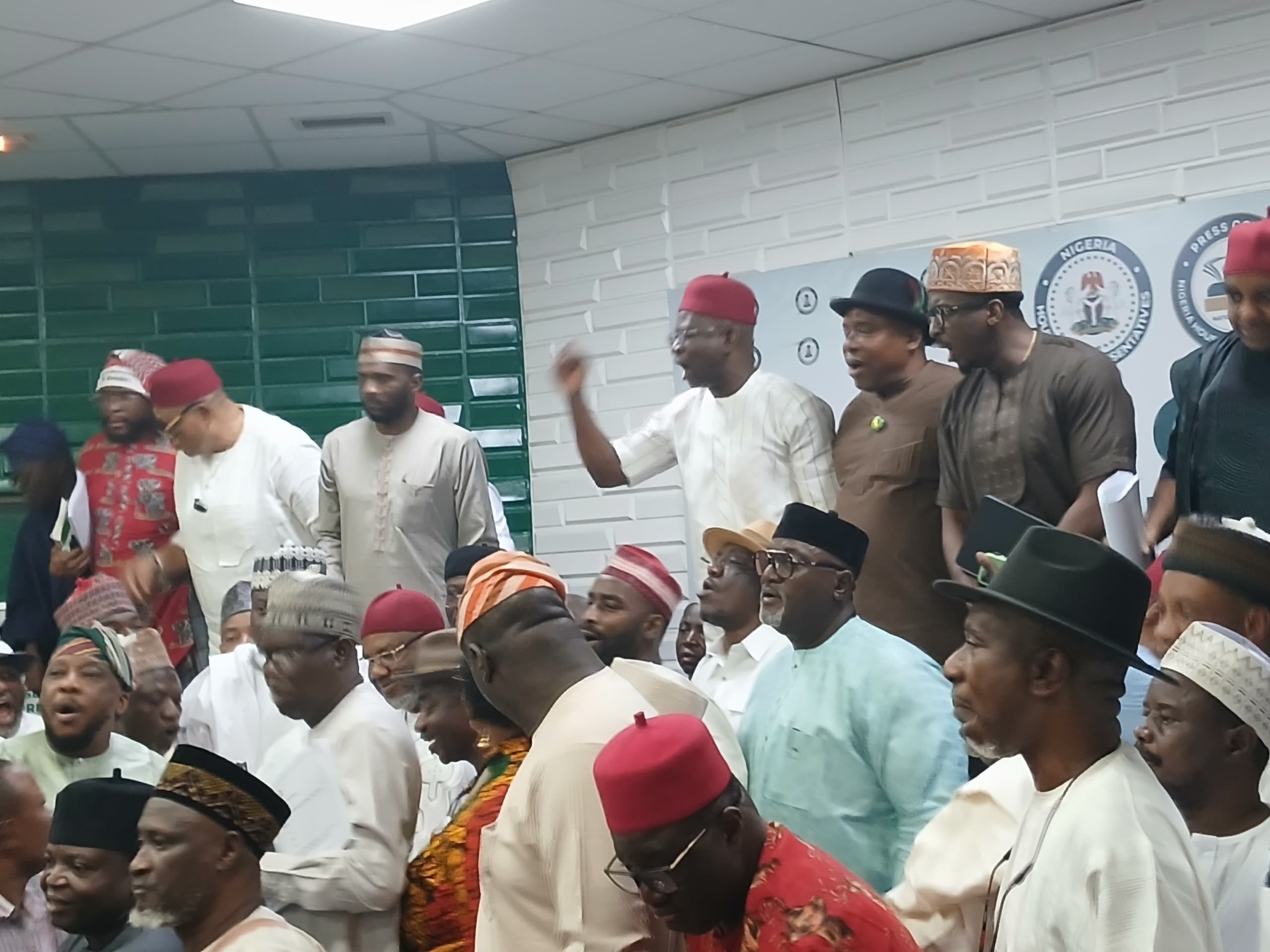
Addressing journalists after plenary, Rotimi described the development as historic in Nigeria’s democratic journey.
> “Today, February 17, 2026, will go down in history as one of the most consequential days in the evolution of our democracy,” he said.
“Both chambers of the National Assembly met to deliberate on the Electoral Act amendment, and we had to convene an emergency session to make some of those considerations.”
Why the Emergency Session Was Held
Rotimi explained that the extraordinary sitting became necessary after new issues emerged following the initial harmonisation between the House and Senate.
> “When you have a conference committee, they can only consider what is before them. Nothing new can be added,” he said. “But since there were new considerations, especially following the announcement of INEC guidelines, we had to have this extraordinary session.”
He maintained that the process aligned with the House Standing Orders and involved consultations between both chambers and the leadership of the National Assembly of Nigeria.
> “The process is very much aligned with the standing orders of the House. We had to hold this extraordinary session to arrive at the provisions that were passed today,” he said.
Electronic Transmission Clause
Responding to concerns over Clause 63 on electronic transmission of results, Rotimi said the final provision was designed as a safeguard, not a reversal of electronic voting.
> “In the wisdom of the majority, it was recrafted in such a way that it would best safeguard the process to ensure polling unit results are transmitted electronically—mandatory,” he said.
He clarified that the allowance for manual results was only a contingency measure.
> “It is only a fail-safe position created in the event that it doesn’t transmit. But if it does transmit, then we don’t have anything to be concerned about.”
Rotimi urged the media to help educate the public, attributing fears surrounding the clause to widespread distrust of the political class.
> “If we have stable internet and IT infrastructure, then we don’t have anything to fear. If the results are transmitted to the portal without issues, you have nothing to fear. The manual form is only a backup.”
He added that the provision could be reviewed in future electoral cycles if electronic transmission proves consistently reliable.
Quorum and Opposition Walkout
Reacting to the walkout by some opposition lawmakers, Rotimi insisted that the House met the constitutional quorum required to pass the bill.
> “Yes, we did have a quorum. This is a Parliament of records,” he said. “It wasn’t the opposition as such that walked out wholly. There were members of the opposition that also remained in Parliament.”
He stressed that the push for credible elections transcends party lines.
> “The ruling party wants free, fair and credible elections as much as opposition members. It is not a partisan thing. At the end of the day, the majority carries the day.”
INEC Timetable and Primary Elections
On whether the amendment would affect the timetable already released by the Independent National Electoral Commission, Rotimi said the new law provides flexibility for adjustments if necessary.
> “In the event that, based on feedback from the public, INEC needs to review the timetable, this bill gives them the grounds to do so,” he said, noting concerns about elections coinciding with major religious observances.
He also confirmed changes to provisions governing party primaries, stating that the revised law recognises only direct and consensus methods.
> “Before, you had direct, indirect and consensus. Now, in the collective wisdom of both chambers, there is a unified position that you have only direct and consensus,” he said.
Rotimi urged journalists and Nigerians to consider the broader scope of amendments rather than focus on a single clause.
> “It’s not only Clause 63 that was amended. There are many other provisions that allow for more transparent and credible elections.”
He said the bill, having passed third reading, would be cleaned up and transmitted to the President for assent.
> “It is our duty now to educate Nigerians on the provisions. The parliamentary process is moving forward, and we have kept our commitment to pass the Electoral Act in good time,” he added.