Listeners:
Top listeners:
-
play_arrow
104.9FM Best rock music demo
-
play_arrow
Demo Radio Nr.1 For New Music And All The Hits!
-
play_arrow
Demo Radio Techno Top Music Radio
-
 play_arrow
Police Commissioner Launches Weapon and Riot Control Training for FCT Officers Democracy Radio
Kaduna Advances Life Skills Education for Girls under AGILE Project
By Olorunyomi Adetinuyo
Kaduna State is set to institutionalize life skills education across its public schools, aimed at equiping young people, particularly girls, with the tools to navigate life beyond the classroom.
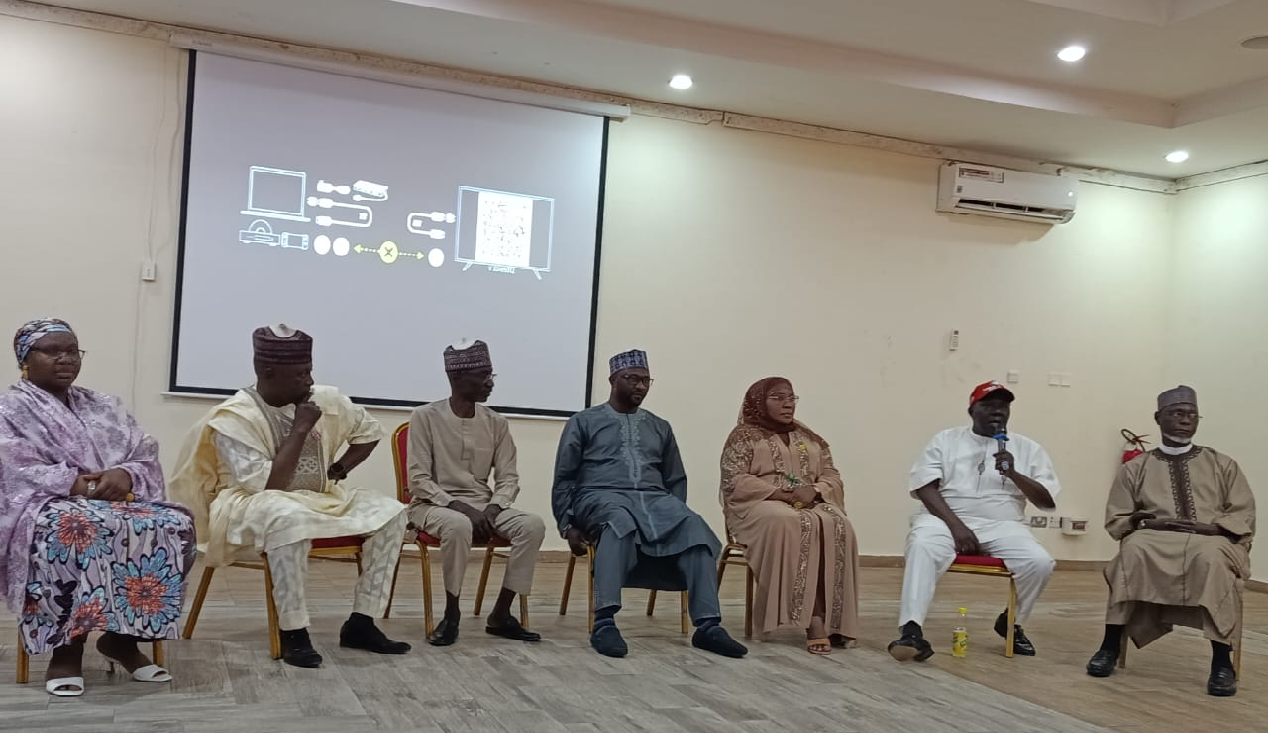
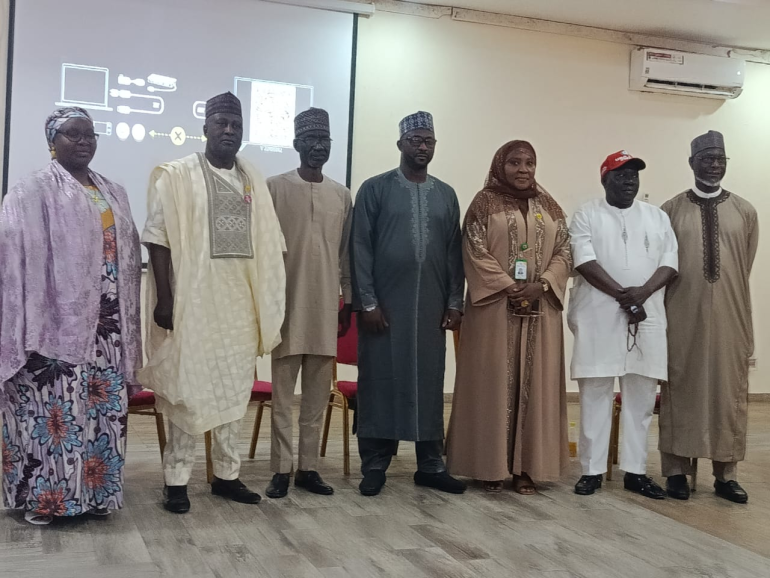
This initiative was highlighted at a recent media briefing in Abuja, organized by the Centre for Girls’ Education (CGE) in collaboration with the AGILE Project, supported by the World Bank.
Speaking on behalf of CGE Executive Director Habiba Mohammed, Deputy Director Maryam Albashir emphasized that the meeting marked a shift from project-based experimentation to system-level reform in Kaduna’s education sector.
“What we have concluded today is not just another meeting. It marks a clear transition from project-based experimentation to system-level reform in how we prepare young people, especially girls, for life beyond the classroom,” Mohammed, said.
For over 18 years, CGE has operated across Northern Nigeria and parts of West Africa, pioneering the Safe Space model, a structured, mentored approach blending life skills, literacy, numeracy, health knowledge, and leadership within trusted community environments.
Mrs Mohammed, explained that the engagement has moved the conversation “from whether life skills matter to how they can be sustainably embedded in the education system.”
Embedding Life Skills into Policy and Curriculum
Central to this reform is a draft Bill aimed at institutionalizing life skills as a co-curricular subject across Kaduna State public secondary schools. The bill is expected to have far-reaching implications for learners, teachers, schools, and the broader education system, particularly in advancing girls’ education, protection, and long-term life outcomes.
Mrs Mohammed stressed that, “Life skills are not ‘soft outcomes.’ They are foundational capabilities that protect learning, dignity, and future opportunity.” The initiative is supported by evidence from large-scale programmes, including AGILE and the Adolescent Girls Initiative (AGI) supported by UNFPA, which have demonstrated improved school retention, delayed marriage, and stronger decision-making among girls.
Community-Driven Implementation
The program targets multiple categories of girls, including pre-primary girls aged 4–6, out-of-school girls, and students transitioning between key education levels.
Mrs Mohammed detailed the Safe Space approach, noting that for out-of-school girls, “We engage religious leaders, community leaders, and parents to provide a space, learning materials, and a trained mentor for tailor-made life skills sessions.”
For girls in school, after-school mentoring sessions complement formal education, covering not only life skills but also basic literacy, numeracy, and STEM subjects such as mathematics, English, physics, chemistry, and biology. Vocational training is also integrated, empowering older girls with trade skills and entrepreneurship opportunities tailored to their communities.
Legislative Support and Governance
Hon. Mahmud Ismaila, Chairman of the Kaduna State House of Assembly Committee on Education, highlighted the draft bill’s objectives: “The bill is about ensuring our students are protected and are given quality education in terms of life skill. We will work on the draft bill to ensure its speedy passage into law.”
He further stressed the need to avoid duplication of laws and ensure the bill’s workability once implemented.
Dr. Suwaiba Ibrahim, Executive Chairman of the Kaduna State Senior Secondary School Education Board, stated that the bill’s success would rely on policy implementation even before formal passage into law. “The Assembly will review the bill, ensure coverage, and support its growth… Once presented, it will not take much time to pass it into law,” she assured.
Mariam Dangaji, AGILE Project Coordinator in Kaduna, emphasized stakeholder buy-in as essential: “We need critical stakeholders, including interfaith bodies, parents, clergy, and government ministries, to create a roadmap for institutionalization… Our aim is to fast-track activities and see how within the first and second quarters of this year, we can have a policy for implementation.”
Global Collaboration
The initiative also benefits from international collaboration. A representative from the University of Adelaide, a partner in the ADELA project, explained that life skills training has reached over 40,000 girls and 1,800 boys across participating states. “Life skills are a component of the ADELA project, focusing on personal hygiene, menstrual hygiene management, negotiation skills, the value of education, and societal norms. Investments in life skills must be sustained even after project closure,” the representative noted.
A Step Toward Systemic Change
The Kaduna State life skills reform represents a paradigm shift in defining quality education, aligning policy, legislation, and community engagement to prepare every learner, especially girls, for a safe, informed, and purposeful future.
As CGE Deputy Director Mrs Mohammed concluded, “When systems work for girls, they work better for everyone. Today brings us closer to an education system that prepares young people not only to pass exams, but to live informed, healthy, and purposeful lives.”