Listeners:
Top listeners:
-
play_arrow
104.9FM Best rock music demo
-
play_arrow
Demo Radio Nr.1 For New Music And All The Hits!
-
play_arrow
Demo Radio Techno Top Music Radio
-
 play_arrow
Police Commissioner Launches Weapon and Riot Control Training for FCT Officers Democracy Radio

LockedIn Gen Z Team Flag Vote-Buying, Poor Turnout in FCT Council Elections
By: Aremu Toyeebaht
Concerns over voter apathy, vote-buying and logistical lapses defined Saturday’s Federal Capital Territory (FCT) Area Council elections, according to a preliminary observation report.
The Independent National Electoral Commission (INEC) conducted polls on February 21, 2026, across six area councils — Abaji, Abuja Municipal Area Council (AMAC), Bwari, Gwagwalada, Kuje and Kwali — with 68 seats at stake, including six chairmanship positions and 62 councillorship seats.
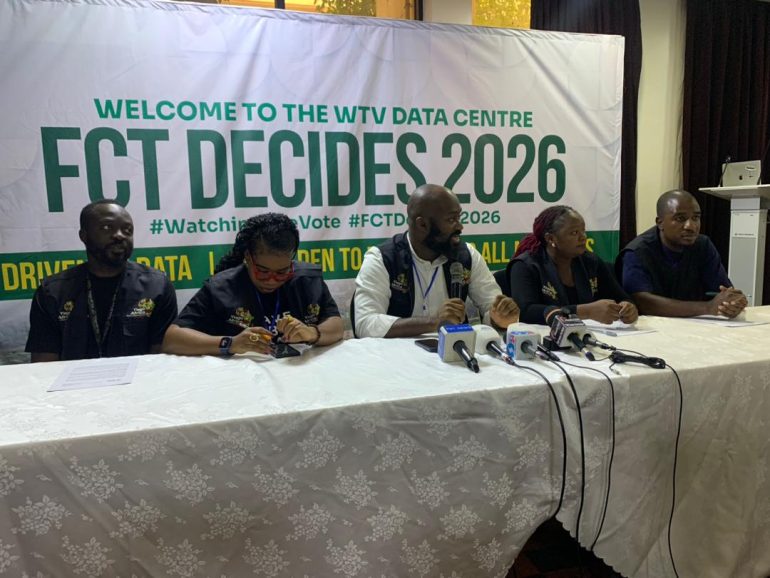
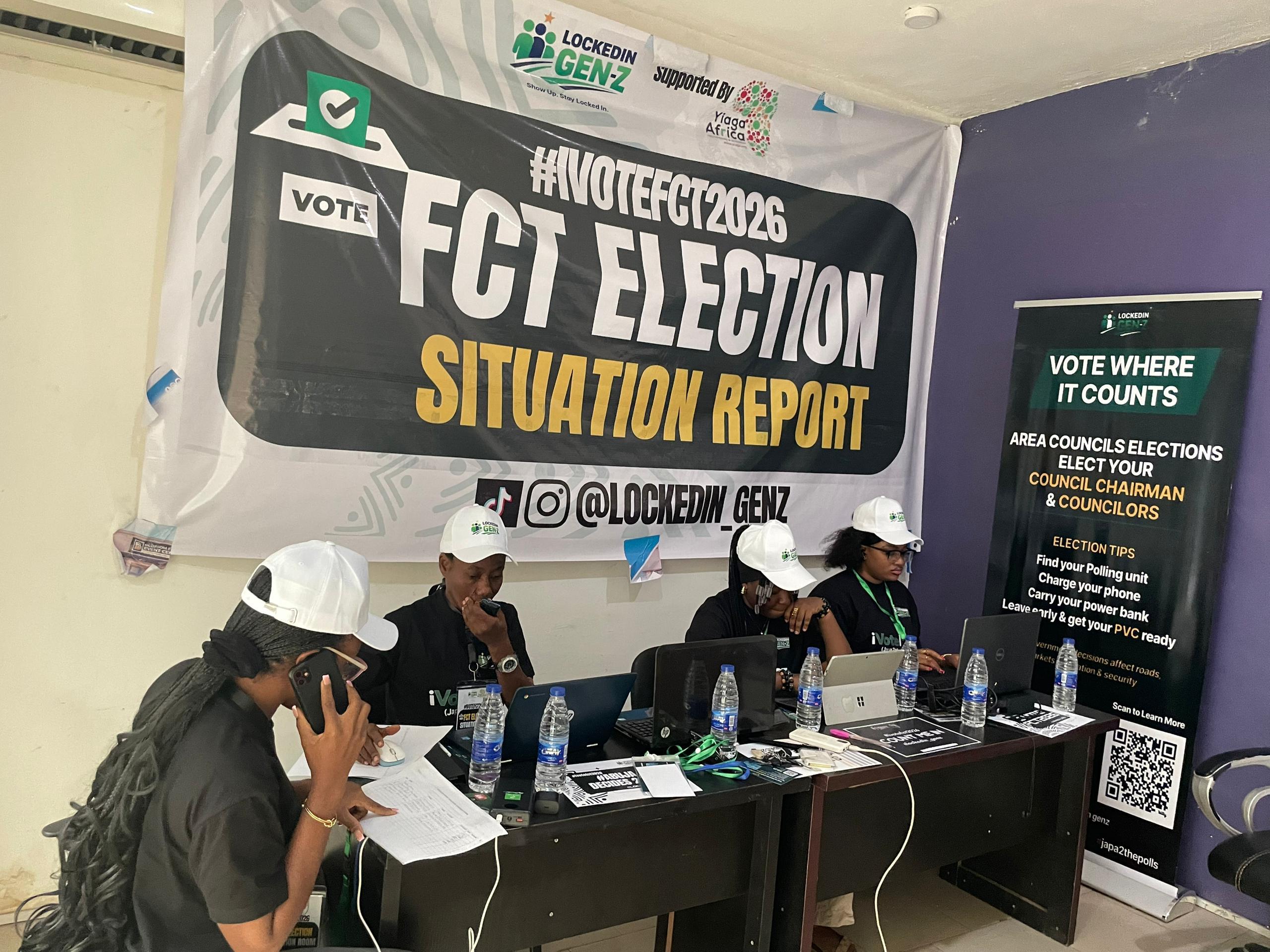
But a post-election assessment by the LockedIn Gen Z Team, supported by Yiaga Africa, flagged critical issues that shaped the exercise.
In a report issued by Team Lead Monique Bello, the group said it deployed 11 observers across the six councils and activated a Situation Room for real-time monitoring of the process.
INEC data cited in the report shows that 1,680,316 voters were registered in the FCT, with 1,587,025 Permanent Voter Cards (PVCs) collected. A total of 637 candidates from 17 political parties contested the elections across 2,818 polling units.
Operational Gaps, Delays
Observers reported that INEC officials arrived between 7:00am and 8:30am in only about 46 percent of polling units monitored, while other locations experienced delays stretching from 8:30am to 11:00am.
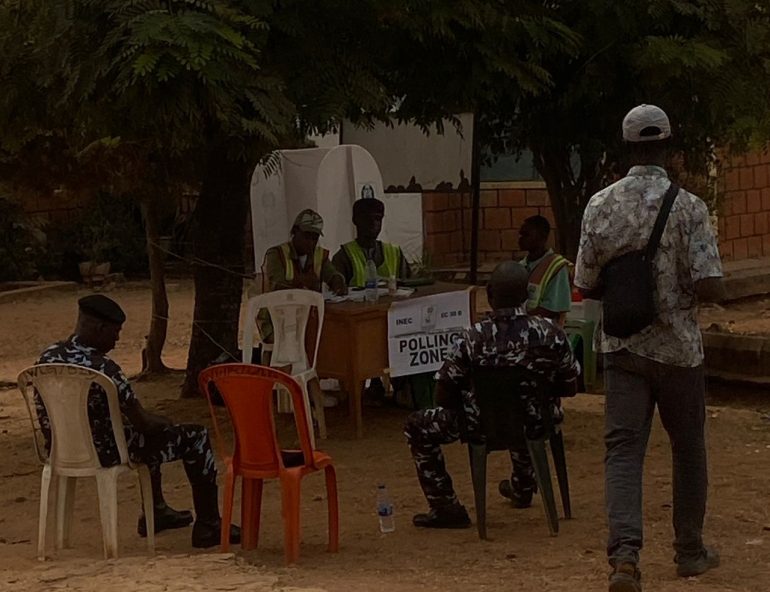
Although accreditation and voting generally commenced within that window, some polling units closed earlier than scheduled due to low turnout.
The report described INEC officials as largely competent in handling BVAS machines but noted gaps among ad-hoc staff in documentation procedures for observers and party agents.
“Delays in some locations, including Apo, were linked to logistical challenges,” the report stated.
Security Presence, Vigilante Concerns
Security personnel were visible in most polling units, with agencies including the Police, Road Safety Corps, Correctional Service, Civil Defence and Immigration coordinating effectively throughout the exercise.
However, observers flagged the presence of armed vigilantes in parts of Gwagwalada and Wuse, describing it as inconsistent with established electoral guidelines.
Urban Voter Apathy
The report recorded particularly low turnout in urban and semi-urban areas.
At Apo Polling Unit 156 in AMAC, just over 100 voters were recorded out of more than 1,000 registered voters — a trend observers say reflected broader voter apathy in city centres.
Turnout was relatively stronger in some rural communities, while youth and Gen Z voters accounted for about 60 percent of participants in polling units observed.
The observers also noted weak party representation at polling units.
“Only about five of the 17 parties contesting had a full complement of agents present in polling units monitored,” the report stated.
Vote-Buying Hotspots
Incidents of vote-buying were reported in Bwari, Gwagwalada and Wuse, with party agents identified as key facilitators.
Despite these concerns, the election was largely peaceful, with only minor disputes reported and swiftly resolved.
Call for 2027 Reforms
The LockedIn Gen Z Team urged electoral stakeholders to urgently address issues of low turnout, vote-buying and operational lapses ahead of future elections.
It also called for sustained peace during collation and final declaration of results, stressing that lessons from the FCT polls should guide preparations for the 2027 general elections.