Listeners:
Top listeners:
-
play_arrow
104.9FM Best rock music demo
-
play_arrow
Demo Radio Nr.1 For New Music And All The Hits!
-
play_arrow
Demo Radio Techno Top Music Radio
-
 play_arrow
Police Commissioner Launches Weapon and Riot Control Training for FCT Officers Democracy Radio

Minority Lawmakers Reject Move to Alter Electoral Act on E-Transmission
By Oluwakemi Kindness
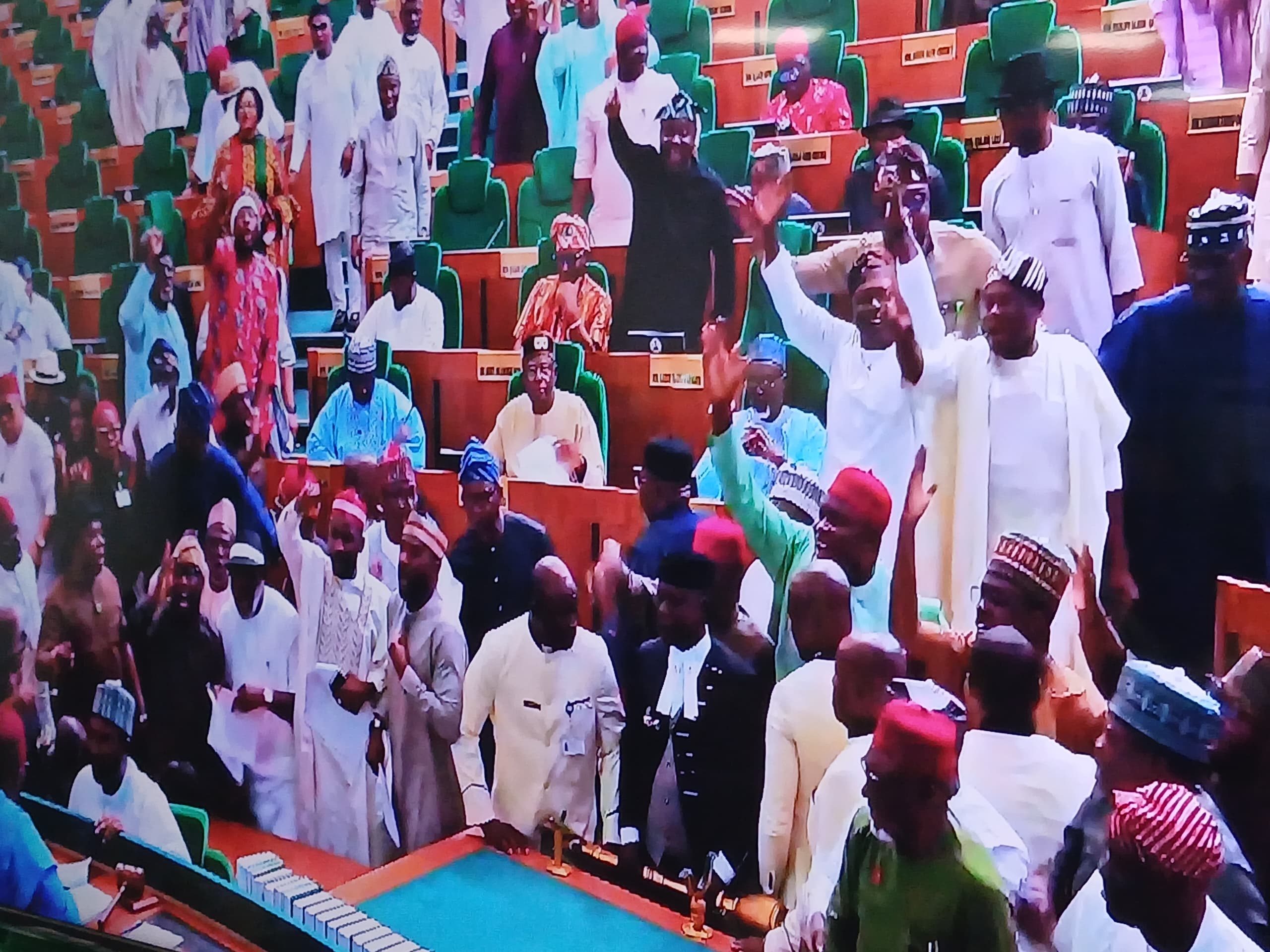
Members of the Minority Caucus in the 10th House of Representatives Nigeria have opposed moves to rescind amendments to key sections of the Electoral Act, particularly provisions on electronic transmission of election results and party primaries.
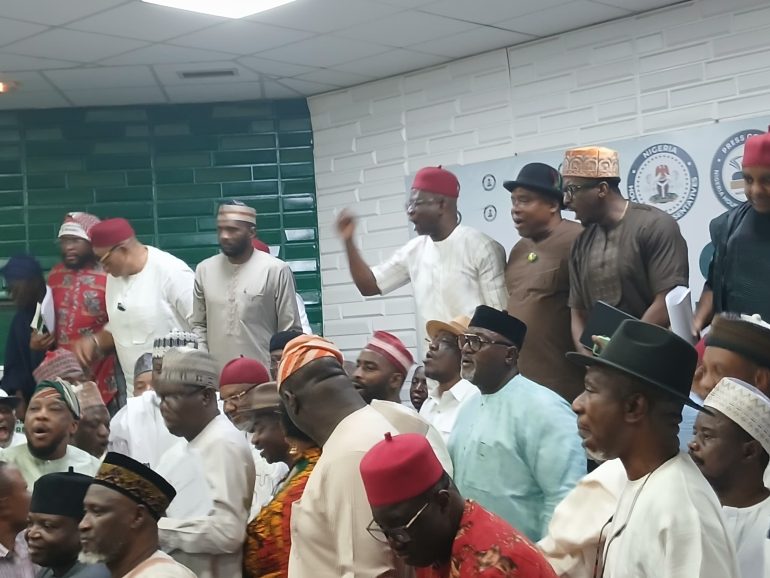
The opposition lawmakers, led by Minority Leader Kingsley Chinda, addressed journalists after staging a walkout from plenary, saying they considered the development a matter of serious national concern and needed to brief Nigerians on events in the chamber.
“We felt it is necessary at every point in time to brief those who have given us the mandate to be here on events that take place in Parliament,” Chinda said. “One of the issues today is the amendment of the Electoral Act.”
Opposition to Changes in Result Transmission
Chinda said the Minority Caucus rejected any attempt to weaken Section 60 of the Electoral Act, which provides for electronic transmission of election results.
“Our position is that elections shall and should be transmitted electronically. We are against any clause that will give room for manipulation or rigging,” he said.
He explained that the caucus also proposed that in cases where there is a conflict between manually collated Form EC8A results and electronically transmitted results, the electronic version should prevail.
“Where there is a conflict between the manual form, which is capable of being manipulated, and the electronically transmitted result, the electronic result should take precedence,” Chinda added.
Allegations Against Majority Party
Chinda alleged that members of the majority party rejected the minority lawmakers’ proposals on political grounds.
“These positions were torn down, and we are aware that they were torn down by members of the All Progressives Congress, not on grounds of patriotism, but on grounds of political party affiliation,” he claimed.
He said the walkout by opposition lawmakers was meant to alert Nigerians and place the issue before the public.
“After what happened on the floor, we felt it was better to register our position with Nigerians, which is the court of public opinion,” he said.
Position on Party Primaries
On Section 84 of the Act, which deals with party primaries, the Minority Caucus maintained that the process of selecting candidates should remain an internal affair of political parties.
“Political parties should be allowed to determine the method they want to adopt in selecting candidates—direct primaries, indirect primaries, or consensus,” Chinda said.
He described the debate as ongoing and urged Nigerians to follow the legislative process closely.
“We are parliamentarians. We will continue to take parliamentary steps and bring the issue back to Nigerians who elected us. The ball is now in your court,” he said.
The controversy over the Electoral Act amendments continues to generate reactions as lawmakers deliberate on proposals that could shape future elections in Nigeria.