Listeners:
Top listeners:
-
play_arrow
104.9FM Best rock music demo
-
play_arrow
Demo Radio Nr.1 For New Music And All The Hits!
-
play_arrow
Demo Radio Techno Top Music Radio
-
 play_arrow
Police Commissioner Launches Weapon and Riot Control Training for FCT Officers Democracy Radio
Customs Surpasses 2025 Revenue Target by ₦697bn
By Oluwakemi Kindness
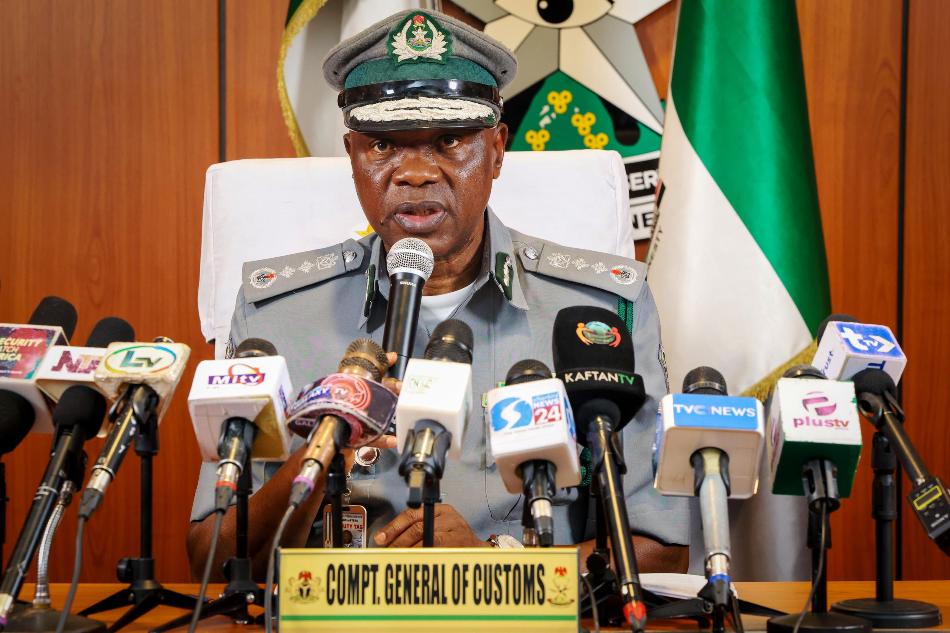
The Nigeria Customs Service (NCS) says it collected ₦7.281 trillion in 2025, surpassing its revenue target of ₦6.584 trillion by ₦697 billion, even as it identified systemic bottlenecks slowing trade at Nigerian ports.
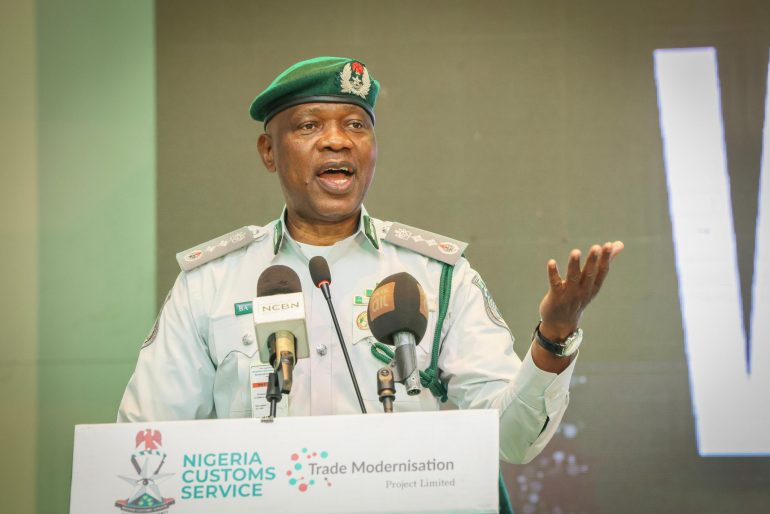
Comptroller-General of Customs, Adewale Adeniyi, disclosed this during the International Customs Day celebration and the official launch of the Time Release Study (TRS).
According to him, the figure represents a 10% performance above target and a 19% year-on-year increase compared to ₦6.1 trillion recorded in 2024.
“Safety and prosperity are not mutually exclusive; Customs stands at the nexus of both,” Adeniyi said, stressing the Service’s dual role of securing the country while facilitating legitimate trade.
₦59bn Seizures: Beyond Revenue Collection
The Customs boss said enforcement operations in 2025 led to over 2,500 seizures with a total duty-paid value of ₦59 billion.
Items intercepted include:
• Narcotics
• Counterfeit medicines
• Wildlife products
• Arms and ammunition
• Petroleum products
• Vehicles
• Substandard consumer goods
Adeniyi said the seizures prevented unsafe medical treatments, organised crime, environmental damage, and fuel subsidy abuse, underscoring that Customs’ responsibilities go beyond revenue to public safety and national security.
Time Release Study: Evidence-Based Reforms
On the Time Release Study (TRS), conducted at Tincan Island Port, measured clearance performance for over 600 declarations using both manual and digital timestamps, Adeniyi highlighted the key findings to include:
- Examination times are efficient.
- Delays are caused by fragmented scheduling, manual documentation, and poor coordination.
- Efficient trade movement requires both security and procedural reform.
The TRS will now serve as a continuous diagnostic tool, enabling the NCS to monitor operations, identify bottlenecks, and implement procedural improvements.
Customs: Port Reforms Need Joint Action
Adeniyi warned that Customs alone cannot fix port inefficiencies, calling for collaboration among:
• Terminal operators
• Shipping companies
• Government agencies
• Truckers and clearing agents
• Banks
• Port authorities
He said the TRS results will drive synchronised inspections, improved coordination, and better system interoperability across stakeholders.
Sustaining the Dual Mission: Protection and Prosperity
Looking forward, he said the NCS strategy to balance societal protection with economic growth is threefold:
- Intelligence-led, Technology-driven Enforcement
Risk management, non-intrusive inspection, post-clearance audits, and data analytics
Shift from physical presence to digital enforcement
- Procedural Reforms
Reduce clearance times, improve transparency, eliminate bottlenecks
Implement TRS recommendations, including synchronized inspections and improved gate coordination
- Strengthening Partnerships
Collaboration with government agencies, private sector actors, port operators, financial institutions, and international bodies such as the WCO
Protection and facilitation are shared responsibilities
According to Adeniyi, trade facilitation and national protection are shared responsibilities, requiring coordinated reforms across Nigeria’s port ecosystem.