Listeners:
Top listeners:
-
play_arrow
104.9FM Best rock music demo
-
play_arrow
Demo Radio Nr.1 For New Music And All The Hits!
-
play_arrow
Demo Radio Techno Top Music Radio
-
 play_arrow
Police Commissioner Launches Weapon and Riot Control Training for FCT Officers Democracy Radio

NiMet Warns of Early Rains, Heatwaves, Dry Spells in 2026

By: Julian Osamoto
The Nigerian Meteorological Agency (NiMet) has raised concern over potential climate risks in 2026.
It warns of early rainfall in the South, uneven distribution in the North, rising temperatures nationwide, and prolonged dry spells that could affect agriculture, water resources, and livelihoods.
Unveiling the 2026 Seasonal Climate Prediction (SCP) in Abuja, the Minister of Aviation and Aerospace Development, Festus Keyamo, said the forecast highlights significant shifts in rainfall patterns that demand early preparedness from governments, farmers, and disaster-management agencies.
Early Rains, False Onset Warning
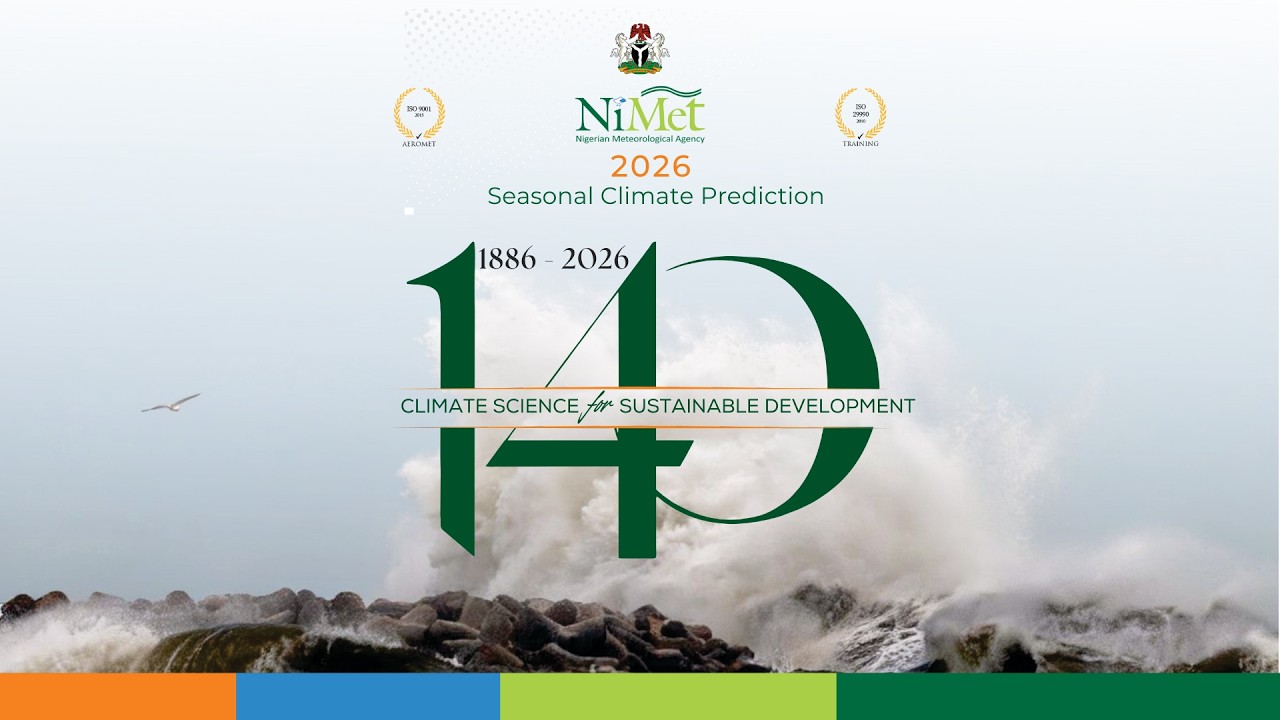
NiMet projects the earliest rainfall onset on February 23 in Bayelsa State, with early onset also expected in Rivers, Akwa Ibom, Cross River, Benue, Kogi, Nasarawa, Oyo and parts of northern states.
However, the Agency warned that early rains should not be mistaken for full seasonal onset, advising farmers to rely strictly on NiMet’s official onset dates.
Central states are expected to see rains between April 21 and May 15, while most northern states will likely begin their season between June 18 and June 23.
Dry Spells and “August Break” Threaten Crops
The SCP warns of severe dry spells lasting up to 21 days in several states during both the March, May and June, August periods. States at risk include Bauchi, Borno, Gombe, Kano, Katsina, Kebbi, Plateau, Niger, Oyo, Sokoto, Yobe, and Zamfara.
NiMet also predicts a severe and prolonged Little Dry Season (August Break) over Lagos, Ogun, Ekiti, and parts of Oyo, with 28–40 days of little or no rainfall, posing risks to crop growth and water supply.
Heatwaves and Rising Temperatures
Director-General of NiMet, Professor Charles Anosike, said above-average temperatures are expected across most regions in January, February, March, May, and June, increasing the likelihood of heatwaves and extreme weather events.
Rainfall prediction
While overall annual rainfall is projected to be near normal in most areas, above-normal rainfall is expected in Borno, Sokoto, Kebbi, Kaduna, Enugu, Cross River, Abia, Ebonyi, Akwa Ibom, and the FCT.
Below-normal rainfall may affect parts of Katsina, Zamfara, Kwara, Oyo, and Ogun states.
Rainfall cessation is expected earlier than normal in Rivers, Akwa Ibom, Kogi, and parts of Niger, but later than usual in Lagos, Anambra, Kaduna, Benue, and Nasarawa.
Call for Local Action
Keyamo urged farmers and rainfall-dependent sectors to use the SCP for planning and risk management, while Professor Anosike called for stronger state-level partnerships to downscale climate information to local communities.
NiMet says it is expanding digital advisory services to ensure timely and reliable climate information, stressing that preparedness at community level will be critical to reducing losses and protecting food security in 2026.
Director-General of NiMet, Prof. Charles Anosike, said temperatures will remain above long-term averages in many regions early in the year, raising the risk of heatwaves and extreme weather.
He urged state governments to partner with NiMet to downscale forecasts for local farmers and communities, adding that the agency is expanding digital advisory services.
The DG NiMet also called on stakeholders in agriculture, water management and disaster response to use the SCP for planning, investment as well as risk reduction as climate variability intensifies.