Listeners:
Top listeners:
-
play_arrow
104.9FM Best rock music demo
-
play_arrow
Demo Radio Nr.1 For New Music And All The Hits!
-
play_arrow
Demo Radio Techno Top Music Radio
-
 play_arrow
Police Commissioner Launches Weapon and Riot Control Training for FCT Officers Democracy Radio
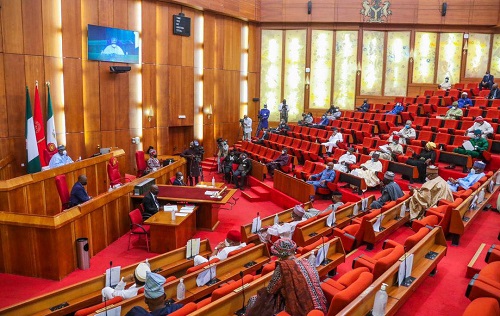
Senate Probes Safe School Initiative as Attacks on Students Continue
By Anayo Akwitti
The Senate has began an investigation into the Safe School Initiative, raising serious questions about why Nigerian schools remain vulnerable despite billions invested to protect children from terrorists and kidnappers.
Chairman of the Senate Ad-hoc Committee, Senator Uzor Kalu, said the probe would uncover why the programme has failed to prevent mass abductions more than a decade after its launch.
“Over 1,680 schoolchildren have been kidnapped and 180 education facilities attacked since 2014. It is unacceptable that our schools remain soft targets,” Kalu said

He warned that the crisis has reached an intolerable point.
Committee to Track Every Naira
The Senate will conduct a full financial audit of the initiative and summon key stakeholders, including ministers, state governors, security agencies, and civil society organisations.
“We will track every naira and every dollar allocated to the Safe School Initiative,” Kalu vowed.
“Despite huge investment and global support, our schools remain unsafe. Nigerians deserve to know why.”
The inquiry will examine how the programme’s core components security deployment, early-warning systems, school infrastructure upgrades, and emergency response mechanisms have been implemented across states.
Not a Witch-Hunt, Senate Insists
Senator Kalu stressed that the probe is aimed at accountability, not blame.
“We owe Nigerian parents the assurance that their children can go to school without fear. This is not a witch-hunt; it is about protecting our future.”
The committee is expected to deliver its report within the prescribed timeframe, with recommendations to overhaul and strengthen the Safe School Initiative.
A Programme Born from Tragedy
The Safe School Initiative was launched in May 2014 after the abduction of the Chibok schoolgirls, attracting an initial $10 million pledge and over $30 million in donor support between 2014 and 2021.
According to the committee, the Federal Government has allocated N144 billion to the initiative for the 2023–2026 period.
Yet insecurity persists especially in northern states raising concerns that the programme has not delivered on its promise to protect Nigeria’s most vulnerable learners.