Listeners:
Top listeners:
-
play_arrow
104.9FM Best rock music demo
-
play_arrow
Demo Radio Nr.1 For New Music And All The Hits!
-
play_arrow
Demo Radio Techno Top Music Radio
-
 play_arrow
Police Commissioner Launches Weapon and Riot Control Training for FCT Officers Democracy Radio
Stakeholders Push for Credible, Inclusive Democracy Ahead of 2027 election
By Julian Osamoto
Ahead of Nigeria’s 2027 elections, key stakeholders have urged stronger collaboration, civic engagement, and political plurality to safeguard the nation’s democracy.
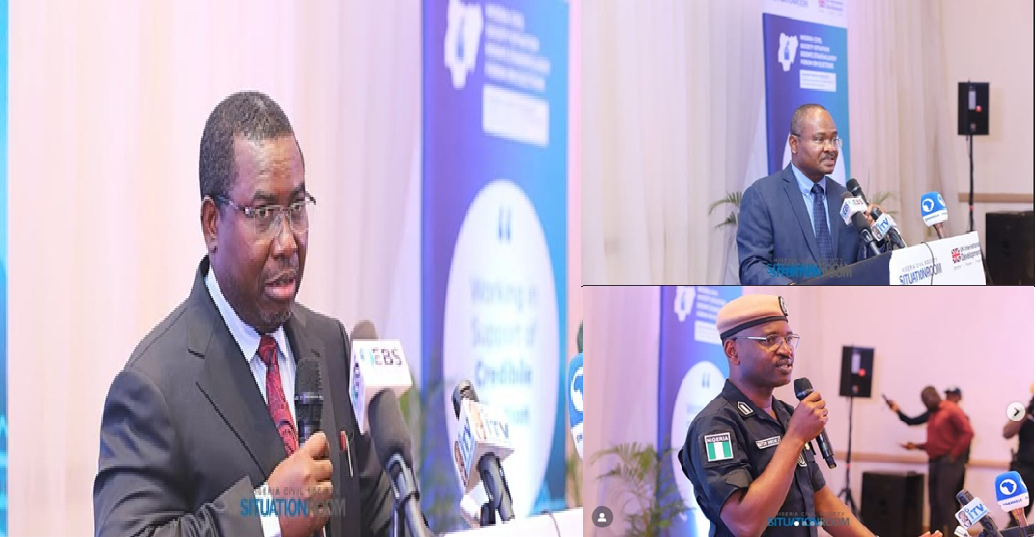
The 9th Annual National Stakeholders’ Forum on Elections, organised by the Nigeria Civil Society Situation Room, brought together civil society leaders, election officials, security agencies, and political actors to address challenges in credible elections and accountable governance.
In his presentation,
INEC Chairman, Prof. Joash Amupitan, who emphasises on Collaboration and Technology described credible elections as the foundation of democracy.
Prof. Amupitan showcased the Commission’s use of technology under the Electoral Act 2022, including the Bimodal Voter Accreditation System (BVAS) and IReV portal, to enhance transparency and build public trust.
He noted ongoing challenges with telecommunications infrastructure affecting real-time result uploads across over 176,000 polling units and said INEC is collaborating with the Nigerian Communications Commission and network providers to resolve these gaps.
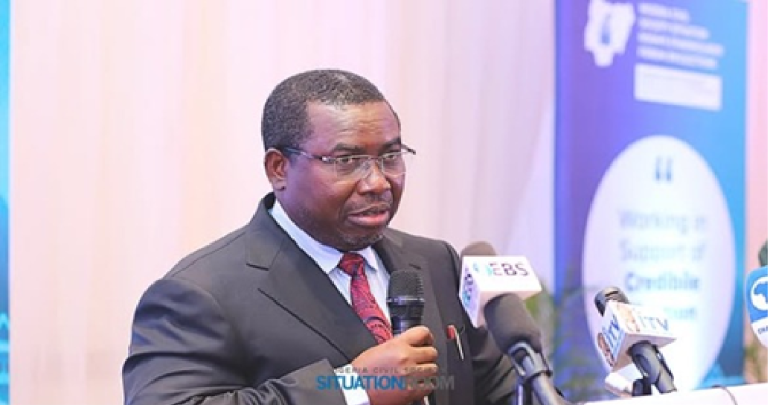
He highlighted decline in voter participation being 27% turnout in the 2023 general elections.
He also praised efforts in Anambra State, where civil society and media engagement boosted registration from 63.9% to 98.8%. “Currently, 2,685,725 new voter registrations have been recorded through Continuous Voter Registration (CVR), led by Osun, Kano, Sokoto, and Imo states”.
Prof. Amupitan announced preparations for the 2026 Area Council Elections in the Federal Capital Territory (Feb 21, 2026), emphasizing coordination with security agencies to prevent vote-buying and voter intimidation.
Representing the Inspector-General of Police, CP Abayomi Shogunle reaffirmed the Nigerian Police Force’s commitment to protecting elections. He outlined a three-phase strategy:
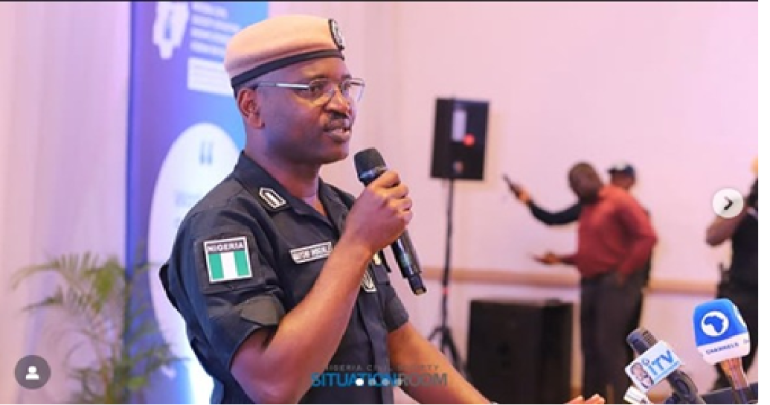
- Pre-Election: Gather intelligence, secure campaigns, and identify hotspots.
- Election Day: Ensure safety at polling units, facilitate voter movement, and respond to incidents.
- Post-Election: Protect electoral materials and personnel, maintain stability during results collation, and deter post-election violence.
Shogunle also highlighted reforms including training on the Electoral Act, human rights, and technology investments to enhance coordination.
Earlier, Dr. Clement Nwankwo, Executive Director of the Policy and Legal Advocacy Center (PLAC), representing Yinusa Ya’au, the convener of the Situation Room, stressed that civil society ensures credible and inclusive elections. “Our main concern is not who wins, but that the process is credible,” he said.
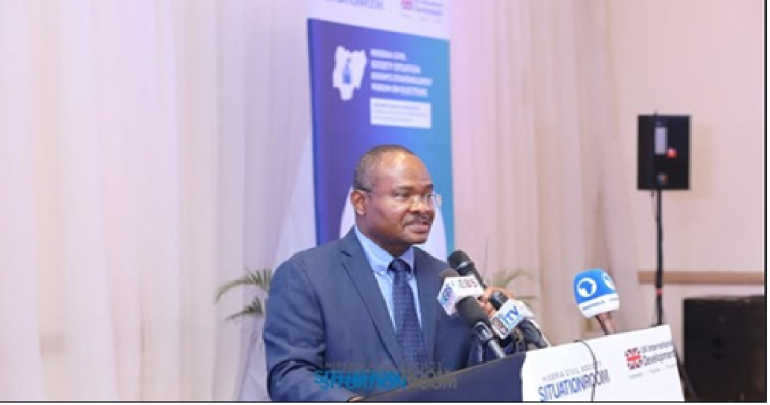
The forum recalled Nigeria’s turbulent political history (1983–1999), warning against military interventions and single-party dominance.
Civil society however, called on INEC to promote political plurality, inclusive governance, and youth engagement, emphasising that democracy thrives on transparency, participation, and accountability.
“Let us not repeat history. Democracy is sustained through pluralism and active civic engagement,” the forum concluded.