By Julian Osamoto
Nigeria is 113 days away from the 2027 presidential and National Assembly elections, but the credibility of the polls will depend on decisions and preparations made long before voters arrive at polling units on January 16.
The Independent National Electoral Commission, INEC, says preparations are on top gear. But speakers at a Democracy and Governance Forum in Abuja on Thursday September 24, identified funding, communication, technology, logistics and public trust as areas that could determine whether those preparations translate into an election Nigerians can trust.
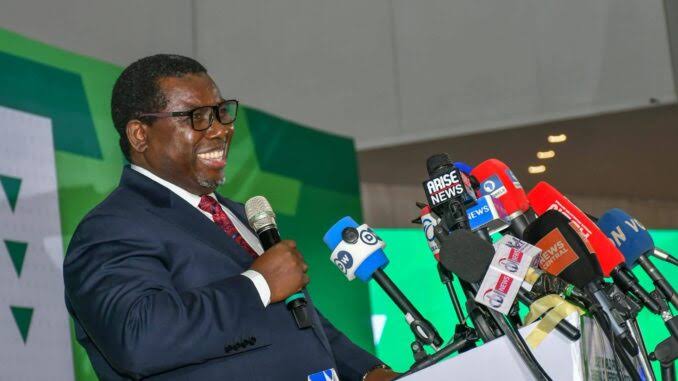
Organised by West Africa Democracy Radio, WADR, the forum brought together electoral officials, civil society representatives, policy analysts and journalists to examine Nigeria’s democratic process ahead of the 2027 elections.
Speaking more on the preparations, INEC Director of Planning and Monitoring, Helen Ajayi, who represented INEC Chairman Professor Joash Amupitan, said the commission had released its revised timetable and schedule of activities on February 26, setting out 14 critical activities ahead of the polls.
She assured that the timetable had been translated into a coordinated programme across INEC’s 23 departments and directorates, 36 state offices, the Federal Capital Territory as well as all 774 local government areas.
Ajayi went on to disclose that some activities had also been completed, others were ongoing, while activities scheduled for later implementation were yet to commence.
That leaves five critical tests for INEC between now and January 16.
1. Voter access must go beyond registration
INEC has completed the Continuous Voter Registration exercise and the display of the preliminary register for claims and objections.
The commission is now synchronising the registration data and preparing the PDF register for nationwide display, while preparations for Permanent Voter Card collection are underway.
Ajayi said INEC would announce when the PVCs will be ready for collection.
For millions of newly registered voters, that next stage will be critical.
At a South-West readiness meeting in Lagos on September 7, Amupitan said INEC had registered 10,772,421 voters across the three phases of the CVR, subject to completion of biometric verification.
He said the commission would review operational bottlenecks affecting PVC distribution at the local government level and ensure that eligible voters were not disenfranchised by logistics.
The challenge is therefore no longer simply registering voters. It is ensuring that eligible Nigerians can access their voter cards, verify their details and understand how to participate in the election without unnecessary barriers.
2. Election technology must be transparent and verifiable
Ajayi said INEC was improving the Bimodal Voter Accreditation System, BVAS, and deploying the EC8A result form to strengthen end-to-end result visibility and reduce opportunities for manual interference.
The commission is also preparing voter education on accreditation, voting procedures, BVAS, PVC collection and other election-day processes.
At the WADR forum, board member Dr Abubakar Muhammad Kudu said BVAS and the INEC Result Viewing, IReV, portal were particularly important to younger Nigerians.
He urged INEC to communicate continuously with voters and stakeholders and build public confidence through greater transparency.
The broader lesson is clear: technology may strengthen transparency, but it cannot by itself create public confidence.
Amupitan made a similar argument during INEC’s South-West readiness assessment on September 7, where he said a well-written Electoral Act, sophisticated technology or an independent electoral commission could not by themselves guarantee a credible election.
He stressed that the credibility of the process would depend significantly on how faithfully electoral officials implement the law.
3. Logistics must work before election day
Ajayi said procurement and delivery of non-sensitive electoral materials to state offices had begun, with early deployment intended to give INEC enough time to distribute materials before election day.
The commission has also trained Grade Level 8 to 16 personnel at state level and is preparing further voter education for the wider public.
But election logistics extend beyond procuring materials. therefore, INEC must coordinate their movement, deploy personnel, prepare ad hoc staff, secure sensitive materials and ensure that polling locations are adequately supported.
Amupitan identified logistics as one of the perennial challenges of election administration and said the commission was working to improve its delivery chain, including movement, early deployment of sensitive materials, security coordination, vendor management and training of ad hoc personnel.
For a commission preparing to administer elections across thousands of polling locations, the question is therefore not simply whether materials have been procured, but if the right materials, personnel, technology and security arrangements will be in place at the right locations at the right time.
4. Electoral officials must protect the integrity of the process
At the September 7 readiness meeting, Amupitan warned electoral officers against partisan conduct and administrative negligence.
He told officials to know the law, understand their responsibilities, remain neutral, document their actions and protect the integrity of the electoral process.
These concerns place accountability alongside technology and logistics as part of INEC’s preparation.
The commission’s systems may be sound on paper, but their credibility will ultimately depend on how officials apply them at polling units, collation centres and other stages of the process.
5. INEC must win information battle and public trust
Perhaps the most difficult challenge is public confidence. Kudu identified funding, communication and public trust as persistent gaps and urged INEC to continuously educate voters and communicate with stakeholders.
But the information challenge is no longer limited to conventional election misinformation.
Kudu urged the media to fact-check information and remain alert to artificial intelligence-driven disinformation and deepfakes as the election approaches.
For INEC, that means communicating clearly and quickly when false information begins circulating about voter registration, PVC collection, polling procedures, BVAS or election results.
The media will also have a role. Public policy analyst Jide Ojo and veteran journalist Topsy Gimba urged journalists to hold political actors accountable to the electorate.
WADR Managing Director Agnes John-Thomasi also called on journalists to maintain professional standards, respect media ethics and report impartially throughout the electoral process.
That makes credible election information part of the wider preparation for January 16.
The clock is already running
INEC’s revised timetable was released on February 26 and contains 14 critical activities for the 2027 elections.
The commission says voter registration and preliminary register display have been completed, while data synchronisation, voter-register preparation and PVC arrangements are ongoing.
Procurement and deployment of non-sensitive materials have begun. Staff training is underway. Voter education is being prepared. INEC has also started zonal readiness assessments across the six geopolitical zones.
The South-West assessment was held in Lagos from September 7 to 9, with the commission using the exercise to assess preparedness, identify operational gaps and emerging risks, and engage frontline electoral officials.
The next 113 days will therefore test more than INEC’s ability to follow a timetable.
They will test whether the commission can turn voter registration, technology, logistics, staff preparation and public communication into an electoral process Nigerians can follow, verify and trust.
January 16 will provide the final test.
But the work of building confidence in that election is already underway.