By Anayo Akwitti
Deputy President of the Senate, Senator Barau I. Jibrin, has faulted the gloomy assessment of Nigeria’s economy and democratic governance by former Vice-President Yemi Osinbajo, saying President Bola Tinubu’s administration is addressing the country’s longstanding challenges.
Barau acknowledged concerns raised by Osinbajo, particularly findings from Afrobarometer surveys, but argued that inadequate communication between government and citizens had contributed to the negative perception of the country’s progress.
He spoke on Tuesday in Yola, Adamawa State, during a public lecture titled “Democracy and Development: Rethinking the Leadership Question,” organised to mark the 59th birthday of Governor Ahmadu Umaru Fintiri.
Osinbajo, who served as Vice-President from 2015 to 2023, had expressed concern over declining public confidence in democratic institutions, economic hardship, unemployment, rising living costs and weakening youth participation in electoral politics.
Citing Afrobarometer findings, the former Vice-President said 64 per cent of Africans preferred democracy to other forms of government, while only 38 per cent were satisfied with how democracy was working in their countries.
He also noted that 59 per cent of Africans considered their national economies to be in bad shape, while 51 per cent believed their economies had deteriorated.
Responding, Barau described Osinbajo’s presentation as thought-provoking but maintained that governments were taking steps to tackle the challenges highlighted in the surveys.
He identified poor communication between leaders and citizens as a major factor contributing to public dissatisfaction.
“One important reason for the gloomy picture portrayed by the surveys, particularly those conducted by Afrobarometer, is the issue of communication between the leaders and the led. There is no proper communication,” he said.
The Deputy Senate President said the Tinubu administration was expanding educational opportunities, improving infrastructure and pursuing economic development initiatives to address the country’s needs.
He cited the Nigerian Education Loan Fund (NELFUND) as an intervention designed to improve access to higher education, particularly for students from disadvantaged backgrounds.
“Before now, it was very difficult for a child who did not have the means to go to school. Now, everyone, except a child who does not want to go to school, can go to school in Nigeria with the NELFUND introduced by this administration,” Barau said.
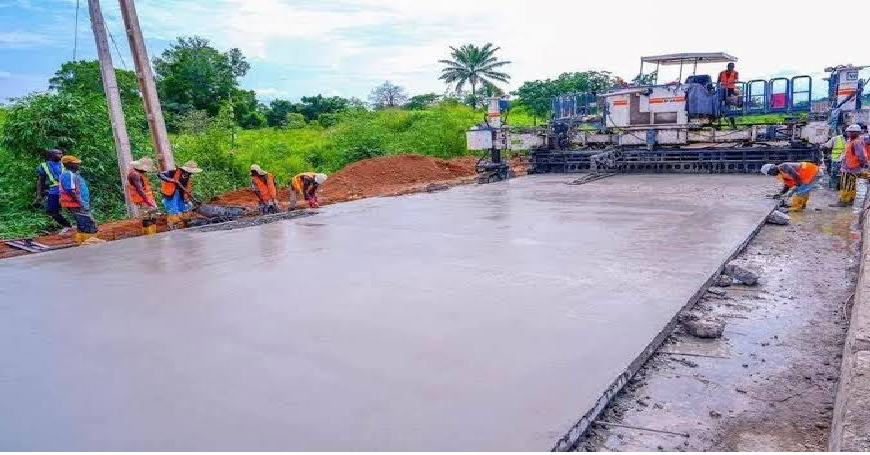
On infrastructure, he listed the Lagos-Calabar Coastal Highway, the Badagry-Sokoto Highway and other road projects in the North-East and North-West as examples of ongoing efforts to address infrastructure deficits and stimulate economic activities.
He said sustained investment in roads, water supply and other essential facilities was necessary to improve living standards and promote economic prosperity.
Barau, who is also the First Deputy Speaker of the ECOWAS Parliament, acknowledged the economic hardship facing Nigerians but said global developments had contributed to rising energy prices and the cost of goods and services.
He cited the Russia-Ukraine war, conflicts in the Middle East and disruptions around the Strait of Hormuz as factors affecting global energy markets and supply chains.
“These challenges are not peculiar to Nigeria; they have an international dimension,” he said, adding that the resulting economic pressures had affected countries across the world.
“Nigeria is not an island,” Barau added.