By Oluwakemi Kindness
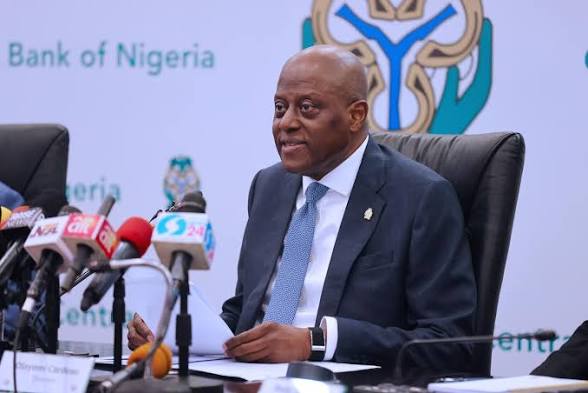
The Governor of the Central Bank of Nigeria, Olayemi Cardoso, has called for stronger collaboration between commercial banks and development finance institutions to ease access to credit for Nigerian businesses targeting international markets.
Cardoso said inadequate working capital is preventing local businesses from fulfilling export orders, limiting their ability to expand production and compete effectively in the global market.
He spoke on Thursday in Abuja at a stakeholder forum organised by the Nigerian Export-Import Bank (NEXIM), with the theme, Leveraging the AfCFTA for Enhanced Nigerian Export Competitiveness and Economic Diversification.
The CBN governor was represented by the Deputy Governor in charge of Financial System Stability, Isa Yuguda.
He explained that some Nigerian businesses secured international orders but lacked the funds to purchase raw materials, obtain required certifications, increase production capacity and finance the shipment of goods.
According to him, addressing the funding gap requires commercial banks and development finance institutions to work together rather than operate as competing sources of finance.
“The objective should not be for development finance institutions to replace commercial banks, but to crowd them in,” he said.
Cardoso urged NEXIM Bank to deploy its financing, guarantees, insurance and risk-sharing instruments to reduce lending risks and attract more private investment into export businesses.
He said such collaboration would make viable export transactions more attractive to commercial lenders and improve access to the financing needed by Nigerian businesses.
The CBN governor also warned that Nigeria’s reliance on a narrow range of export commodities exposed the economy to external shocks, underscoring the need to broaden its export base.
He stressed that economic diversification must go beyond increasing export volumes to generating more value, expanding production, creating employment and securing sustainable foreign exchange earnings.
“Our ambition must extend beyond increasing export volumes. Nigeria must increase the value, sophistication, and competitiveness of what it exports,” he said